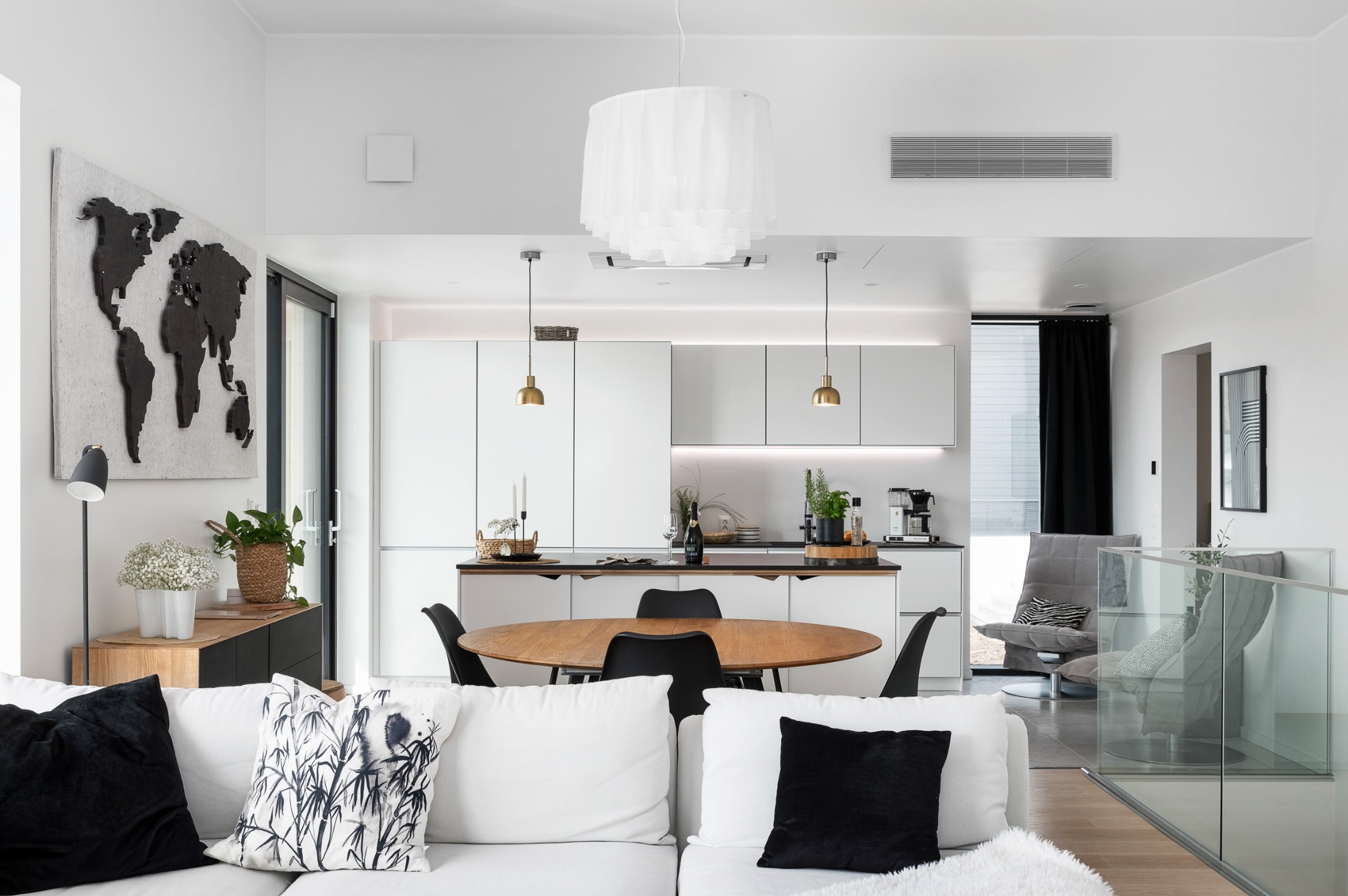
Of all the rooms in a home, the living room is the hardest to light well, precisely because it's the least single-purpose. In the space of one evening it might host a bright family gathering, a quiet hour of reading, a movie with the lights nearly off, and a work call at a laptop on the coffee table. A single central ceiling light — the default in far too many homes — cannot do all of that. Living room lighting design is really about building a small toolkit of light sources that can be combined and dimmed differently depending on what the room needs to do at any given moment.
What makes living room lighting different
Unlike a kitchen or a bathroom, where the tasks are fairly fixed (chopping vegetables, seeing yourself in a mirror), a living room's tasks change hour to hour and person to person. That variability is the whole design challenge. The goal isn't to find "the right brightness" for the living room — it's to build several independently controllable layers that, together, can produce a bright, alert daytime setting and a calm, low evening setting from the same fixtures.
Layered lighting: ambient, task and accent
Three layers do almost all the work in a living room. Ambient light is the general, even illumination that lets you move around and see the room as a whole — ceiling-mounted downlights, a central fixture, or indirect LED strips bounced off the ceiling all qualify. Task light is aimed at a specific activity: a reading lamp beside an armchair, a floor lamp near a desk corner, or focused light over a games table. Accent light draws the eye to something specific — a piece of art, a bookshelf, a textured feature wall, or architectural detail — and is what gives a living room depth after dark, rather than the flat look of a single overhead source.
Recommended lux levels for a living room
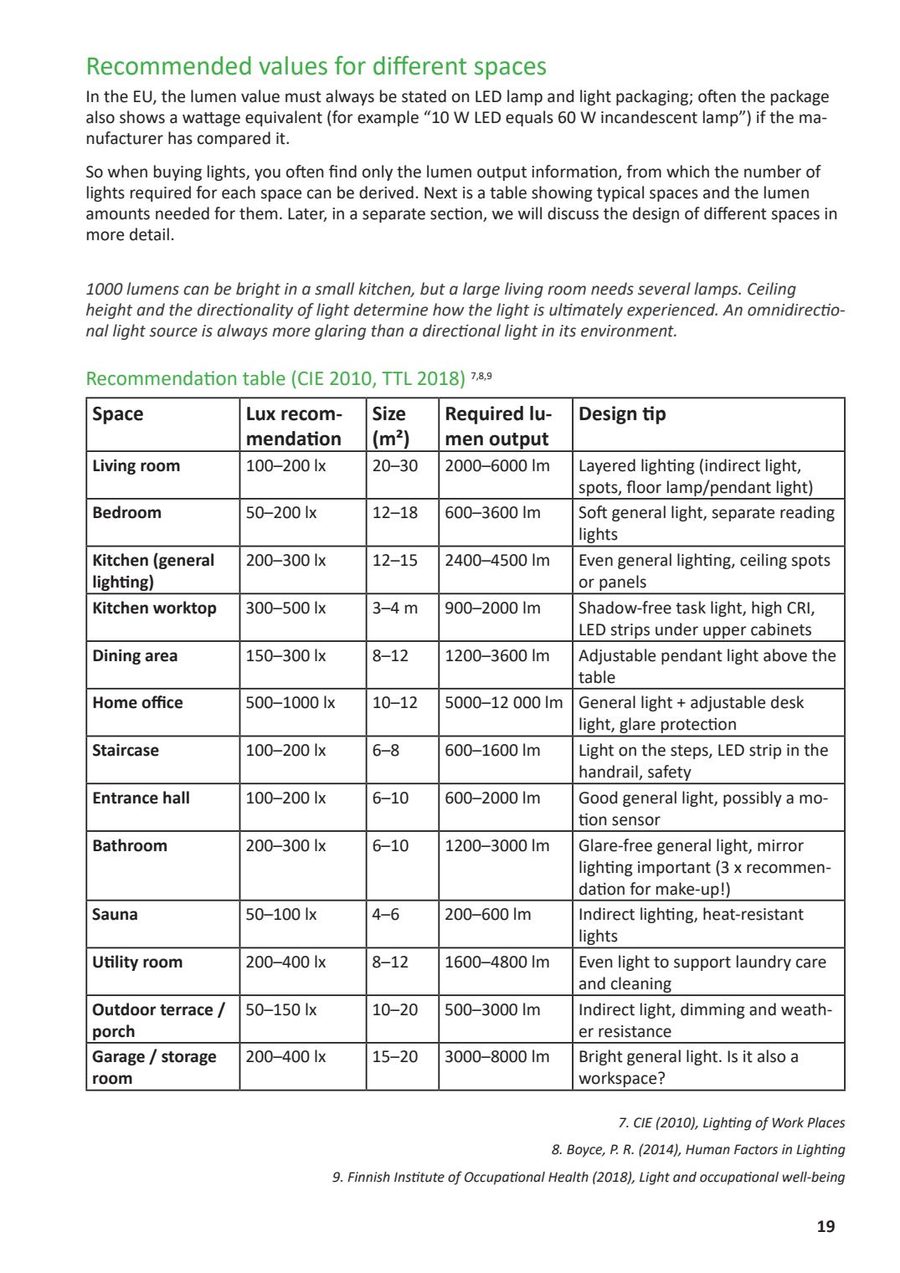
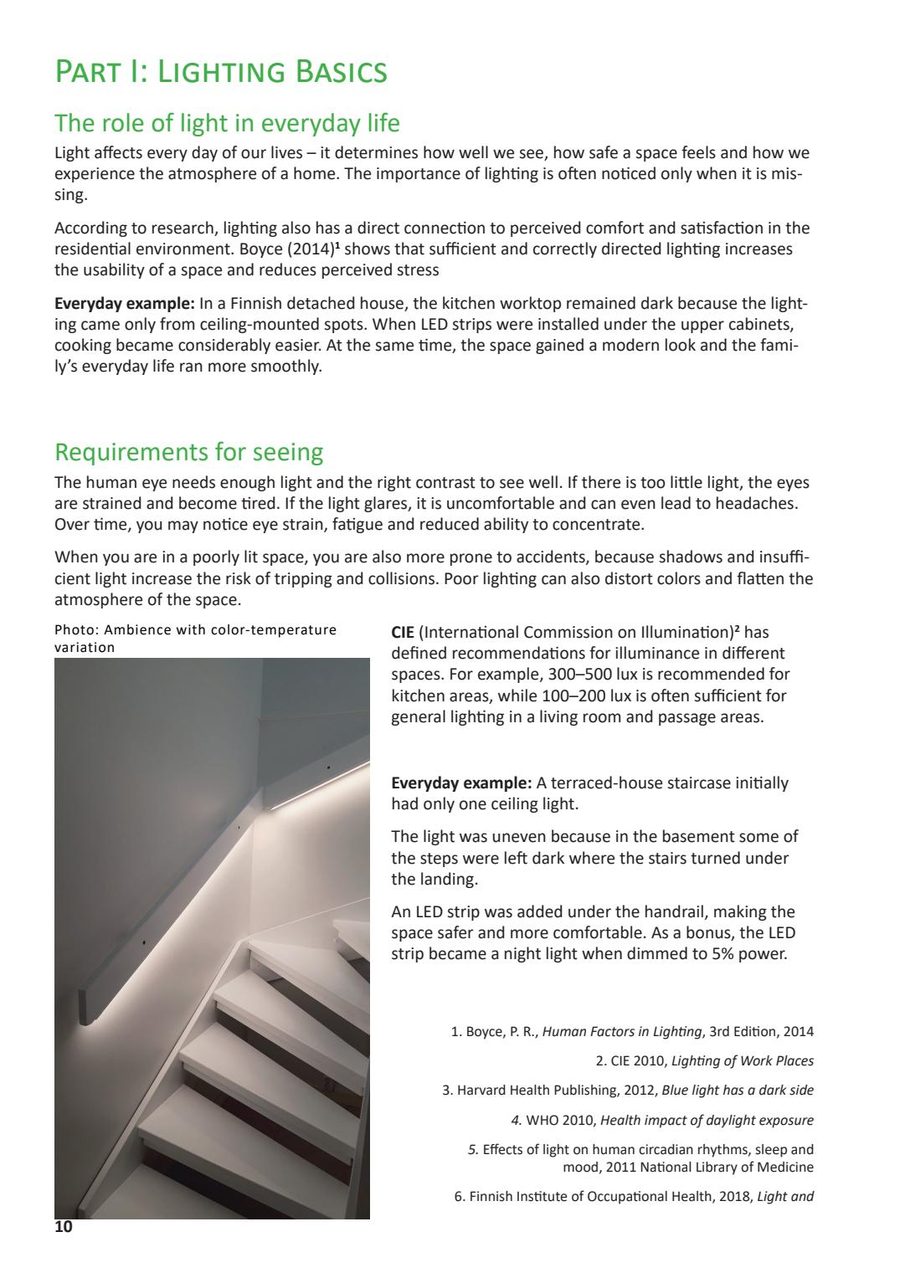
As a starting point, general ambient lighting in a living room works well around 150–300 lux, layered with brighter task lighting (300+ lux) near reading chairs, desks or games tables, and much dimmer accent lighting (well under 100 lux) for mood in the evening. These numbers are a starting range, not a hard rule — for the full explanation of what lux means and how it's calculated, see our companion guide, What Is Lux? The Complete Lux Guide and Reference Table.
LED strips and indirect lighting in the living room
LED strips are one of the most effective tools for living room ambiance because they add light without adding visible fixtures. Common placements include behind a TV unit or media wall (reduces eye strain from screen contrast and adds a soft glow), along a ceiling cove or behind a bulkhead (bounces soft, even ambient light off the ceiling), under a floating shelving unit or sideboard (creates a sense of the furniture "floating"), and behind a sofa's back panel or headboard-style wall feature for a soft accent glow. Warm white (around 2700–3000K) is almost always the right choice for living room strips — cooler tones tend to read as clinical rather than relaxing in a space meant for unwinding.
Highlighting furniture, art and shelving
Accent lighting is what separates a living room that feels flat from one that feels designed. A small spotlight or picture light aimed at a piece of art, integrated LED strips inside open shelving to backlight books and objects, or a narrow-beam spot grazing a textured wall all add visual depth without raising the room's overall brightness. The goal is contrast — a few deliberately lit focal points against a moderately lit background reads as intentional, while trying to light everything equally tends to flatten the room.
Controls and dimming
Because a living room needs to shift between very different moods throughout the day, dimming and grouping matter more here than almost anywhere else in the home. At minimum, ambient, task and accent layers should be on separate switches or dimmer circuits so they can be combined independently — bright ambient light alone for cleaning, dim accent light alone for a movie, or task light alone for reading without lighting the whole room. Smart lighting systems (covered in our Smart Lighting Controls guide) make it easy to save these combinations as presets — a "movie night" scene, a "reading" scene, a "hosting" scene — so the right layers turn on together with one tap instead of adjusting each light individually.
A practical living room lighting layout
A workable starting layout for a mid-sized living room: ambient downlights or an indirect LED cove around the room's perimeter for general light, a floor or table lamp beside the main reading chair for task light, an LED strip behind the TV unit or media wall to reduce screen glare, accent lighting inside a shelving unit or aimed at one piece of art, and everything grouped into at least three independently dimmable circuits. From there, the exact fixture count and placement depend on room size, ceiling height and furniture layout — which is exactly what a floor-plan tool like Lightingdesigner.io is built to calculate, showing you the resulting lux heatmap as you place each fixture.