Guida pratica per luce sul piano di lavoro, sospensioni, luci a soffitto, luce indiretta e gruppi di controllo in cucina.
Why kitchen lighting needs layers
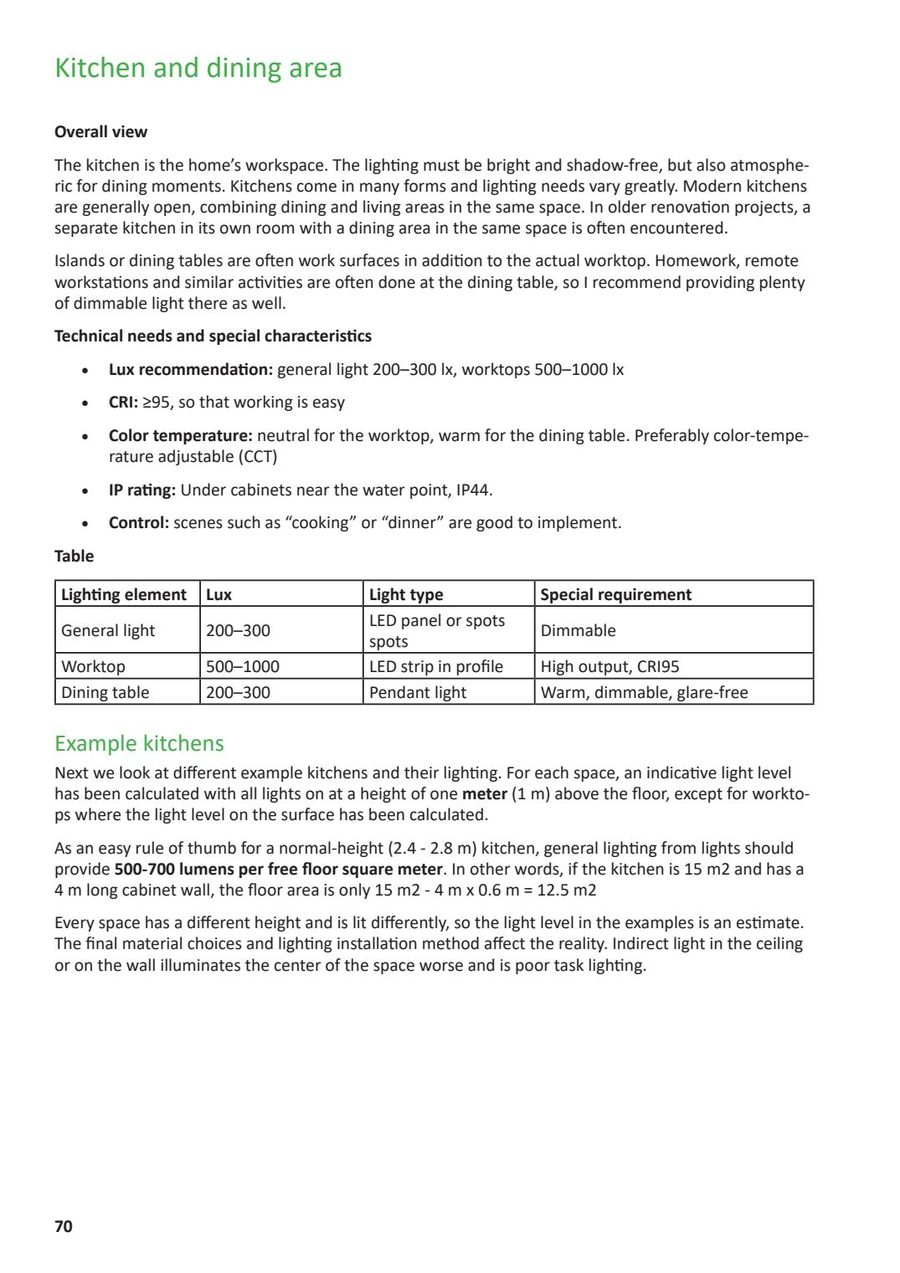
The kitchen is both a working space and a social space. The same room may be used for cooking, cleaning, homework, dining and evening conversation. One ceiling light cannot support all of these uses well. A good kitchen lighting plan separates worktop light, general light, dining or island light and ambience.
Worktop lighting is the most important functional layer. General ceiling light supports movement and cleaning. Pendants over a dining table or island create focus and atmosphere. Indirect LED strip above cabinets or in ceiling details can make the kitchen feel softer in the evening. Each layer should have its own control whenever possible.
Worktop lighting should be shadow-free
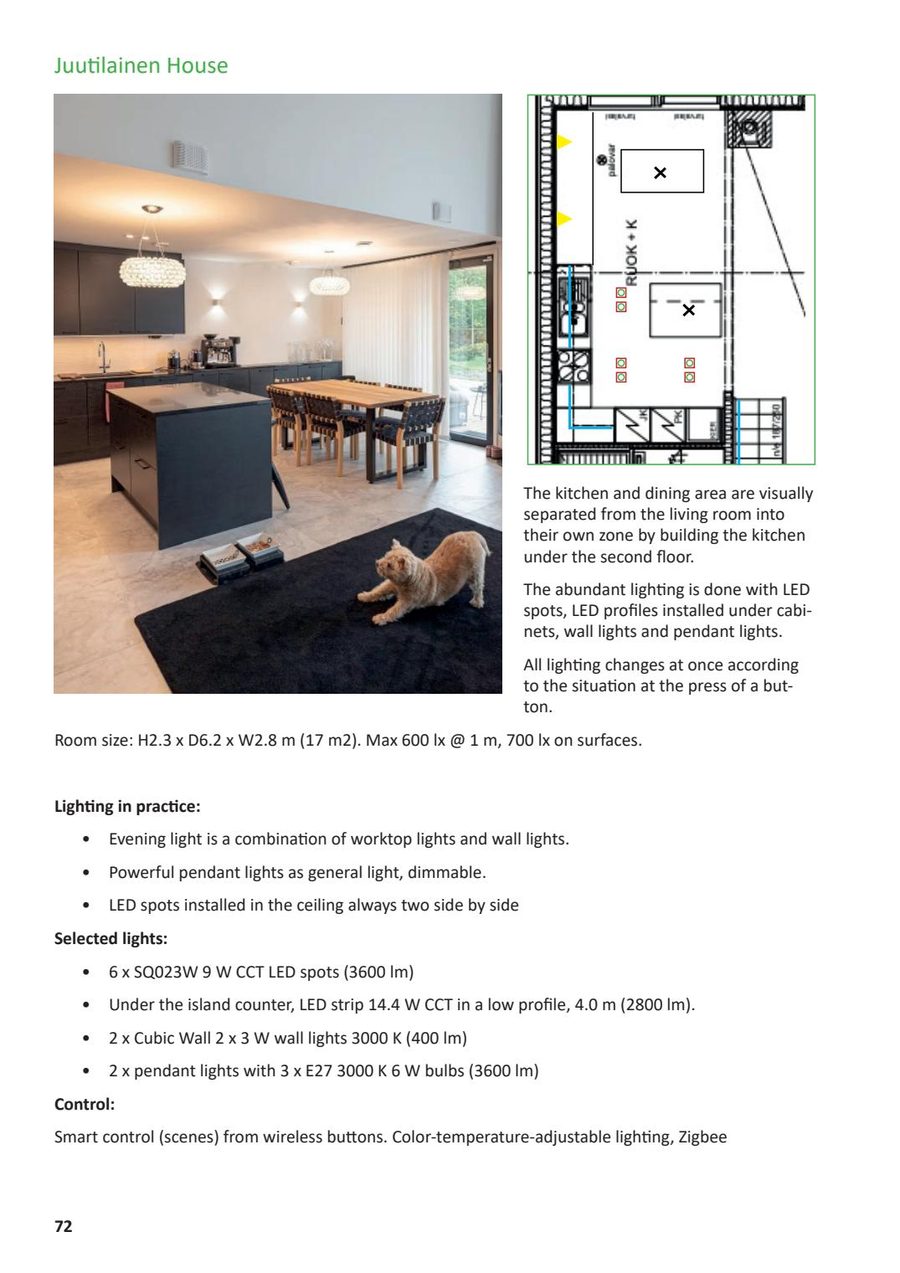
The most common kitchen lighting mistake is relying only on ceiling spots. When a person stands at the worktop, their body can block the ceiling light and cast a shadow exactly where the light is needed. Under-cabinet LED strip solves this because it places the light in front of the person and close to the surface.
A good worktop light should be continuous, bright enough and high CRI. It should illuminate the full depth of the worktop without glaring into the eyes. The strip is usually installed in an aluminum profile with an opal diffuser. If there are no upper cabinets, alternatives include carefully placed downlights, wall-mounted profiles or pendant/task solutions.
Ceiling lighting and beam angle
Ceiling lights in kitchens should provide even general light without creating harsh spots or glare. Beam angle matters. A narrow beam may create dramatic pools of light, but it can leave shadows between luminaires. A wider beam gives more even coverage, especially at normal ceiling heights. The correct spacing depends on ceiling height, beam angle, lumen output and surface colors.
In open-plan kitchens, ceiling lighting should also relate to the living area. Too much cold or bright light can make the whole open space feel like a workplace. Dimming or separate control groups help the kitchen shift from working mode to evening mode.
Dining table and island lighting
A pendant above the dining table should illuminate the table surface and create a visual center. It should not glare into the eyes when people sit down. The height, shade, beam angle and dimming all affect comfort. Over an island, several smaller pendants can create rhythm, but they should not block views or conflict with ceiling lights.
Dining lighting can be warmer than worktop lighting. Around 2700-3000 K often feels more inviting, while the worktop may use 3000-4000 K depending on preference. If the whole kitchen uses CCT-adjustable light, the room can be practical during the day and warmer in the evening.
Indirect light in kitchens
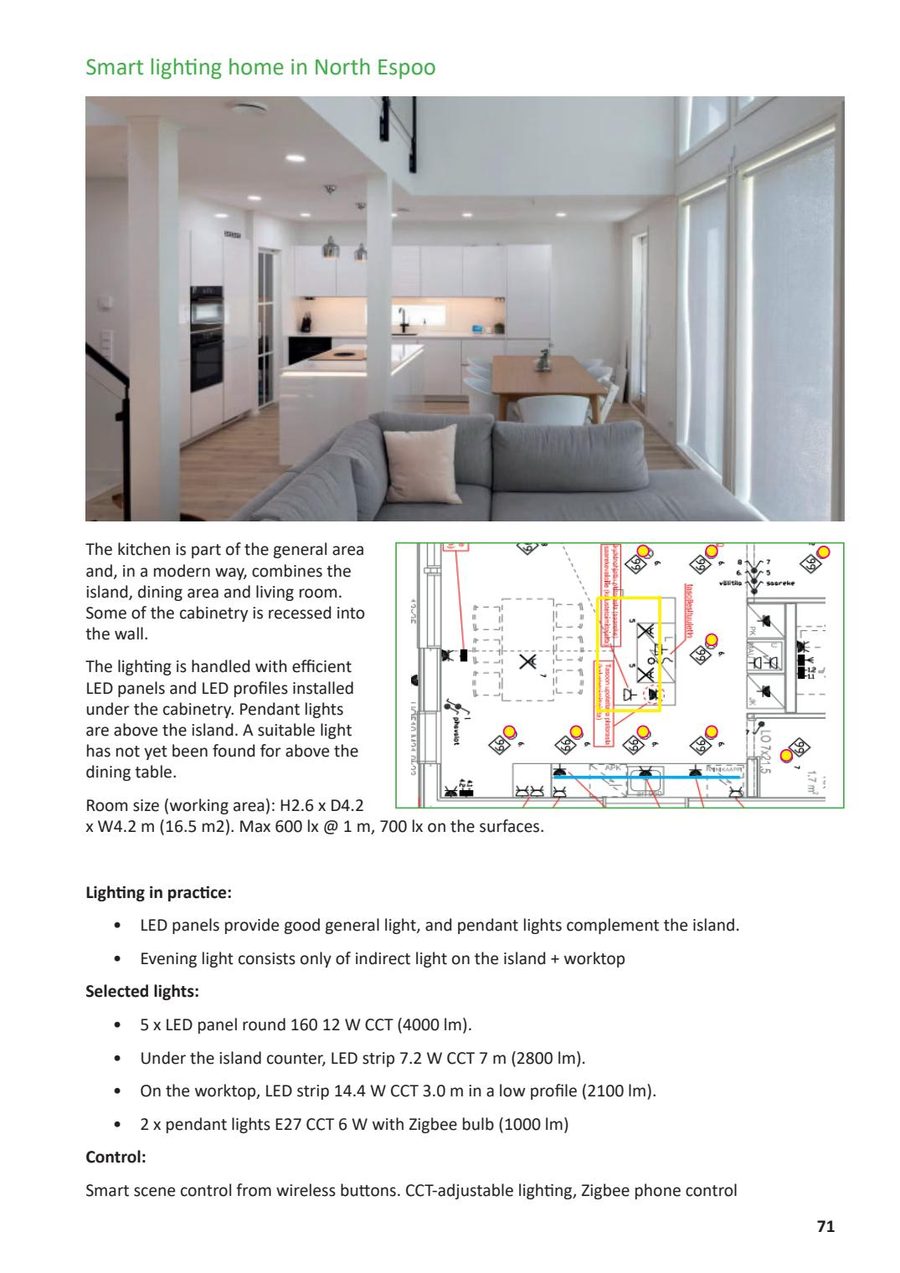
Indirect LED strip above cabinets or in ceiling drops adds depth and makes the kitchen feel larger. It is not usually the main working light, but it supports ambience and can serve as a comfortable evening light. Indirect light works best when it reflects from a light surface and the strip is hidden from normal viewing angles.
Plan indirect light early. It needs space, profiles, drivers and control wiring. If it is added too late, the result may be visible strips, poor access to drivers or uneven reflections. When planned well, indirect light is one of the most effective ways to make a kitchen feel designed rather than simply lit.
Kitchen control strategy
At minimum, separate worktop light and general light. Ideally, also separate pendants and indirect light. This allows practical work, cleaning, dinner and evening ambience to each have their own setting. Smart control can add scenes such as Cooking, Dining, Cleaning and Night.
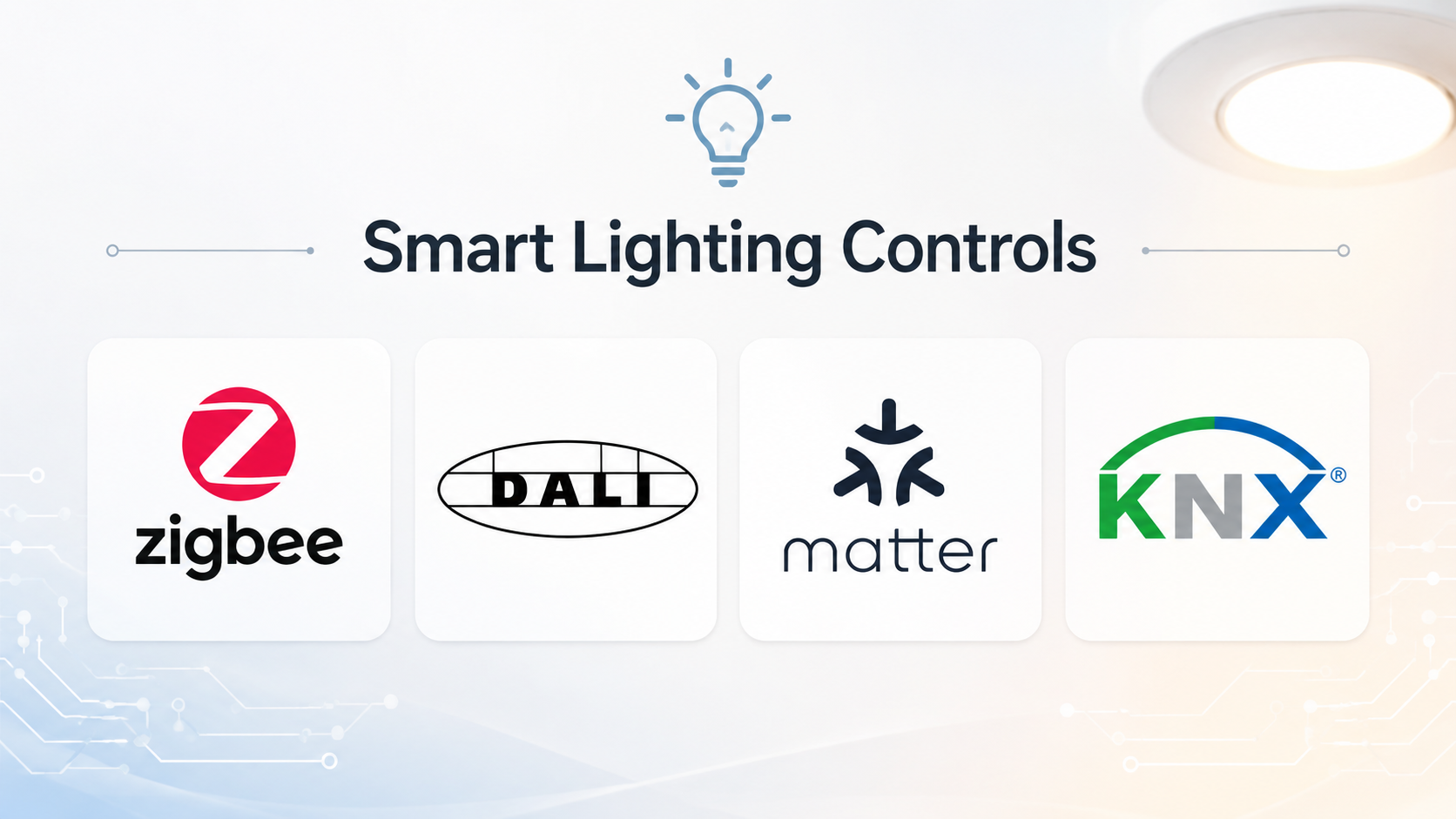
For renovation projects, wireless systems such as Zigbee can make control easier without new control cables. For new builds or larger projects, DALI or KNX may be worth considering. The important decision is not the protocol first; it is what the user needs the kitchen to do.