Repères pratiques en lux pour salons, chambres, cuisines, salles de bain, zones de travail et circulations.
What does lux mean?
Lux is lumens per square meter. Lumen tells how much light a lamp produces, while lux tells how much light arrives on a surface. This is why a light that sounds powerful on the package may still feel weak in a real room. The light spreads, loses strength with distance and is affected by ceiling height, beam angle, wall colors and the position of the luminaire.
For home design, lux should be treated as a practical target rather than a laboratory value. A kitchen worktop, desk or mirror needs a higher lux level than a corridor or living room ambience. When you know the target surface, you can estimate whether one luminaire is enough or whether several light points, LED strips or task lights are needed.
Typical lux levels in homes
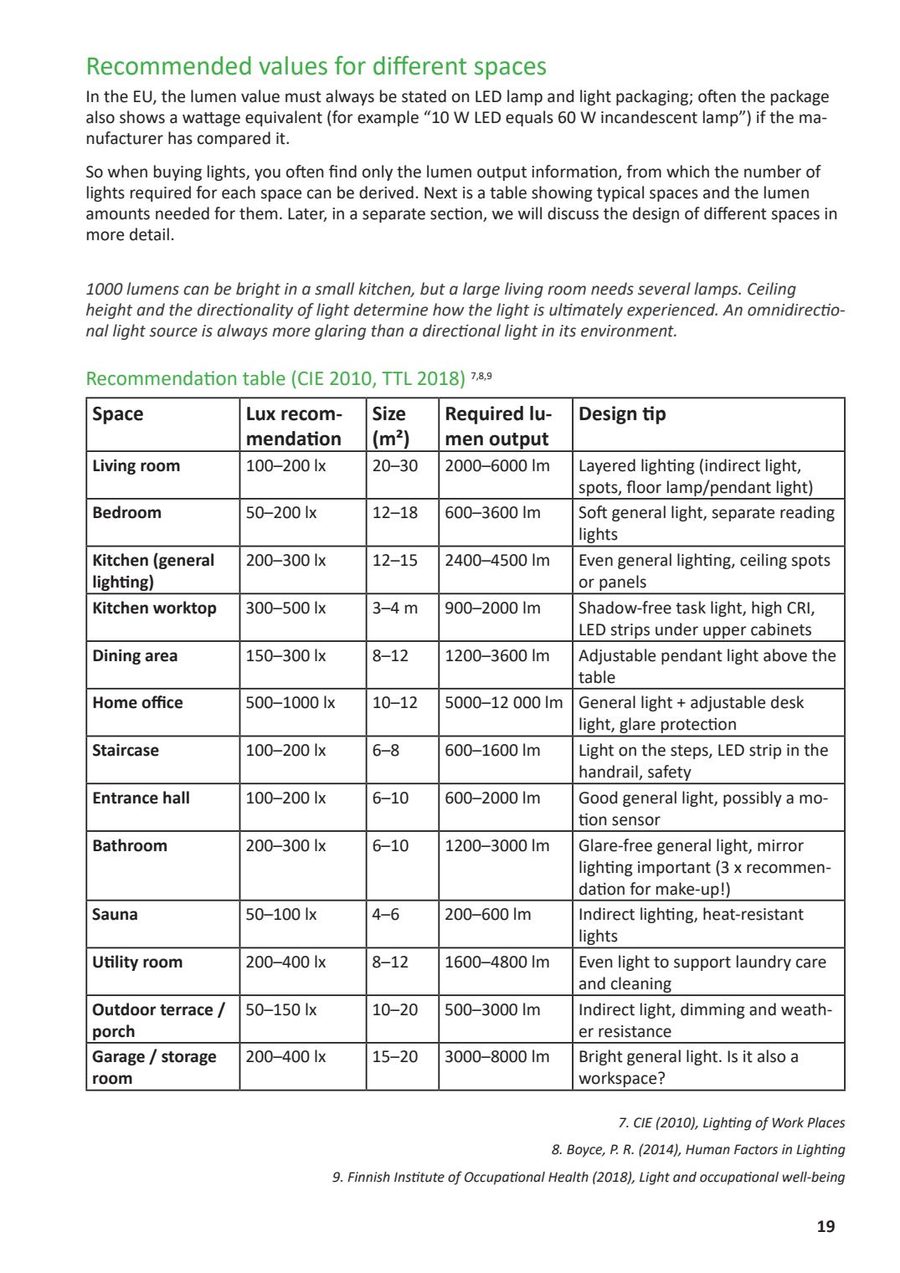
Relaxed spaces usually need less light than working spaces. A living room may feel comfortable with 100-200 lx as general lighting, especially if there are separate reading or accent lights. Bedrooms often work with 50-150 lx for general light, but reading lights should be stronger and directional. Corridors and entrance halls need enough light for safety and orientation, often around 100-200 lx.
Work areas need more. A kitchen worktop should often reach 300-500 lx or more, and many practical kitchen installations aim higher because the light is close to the surface and should be shadow-free. A home office desk should generally be around 500 lx or more. Bathrooms need good general light, but mirror and make-up areas need careful vertical illumination so the face is not left in shadow.
Why one central light is often not enough
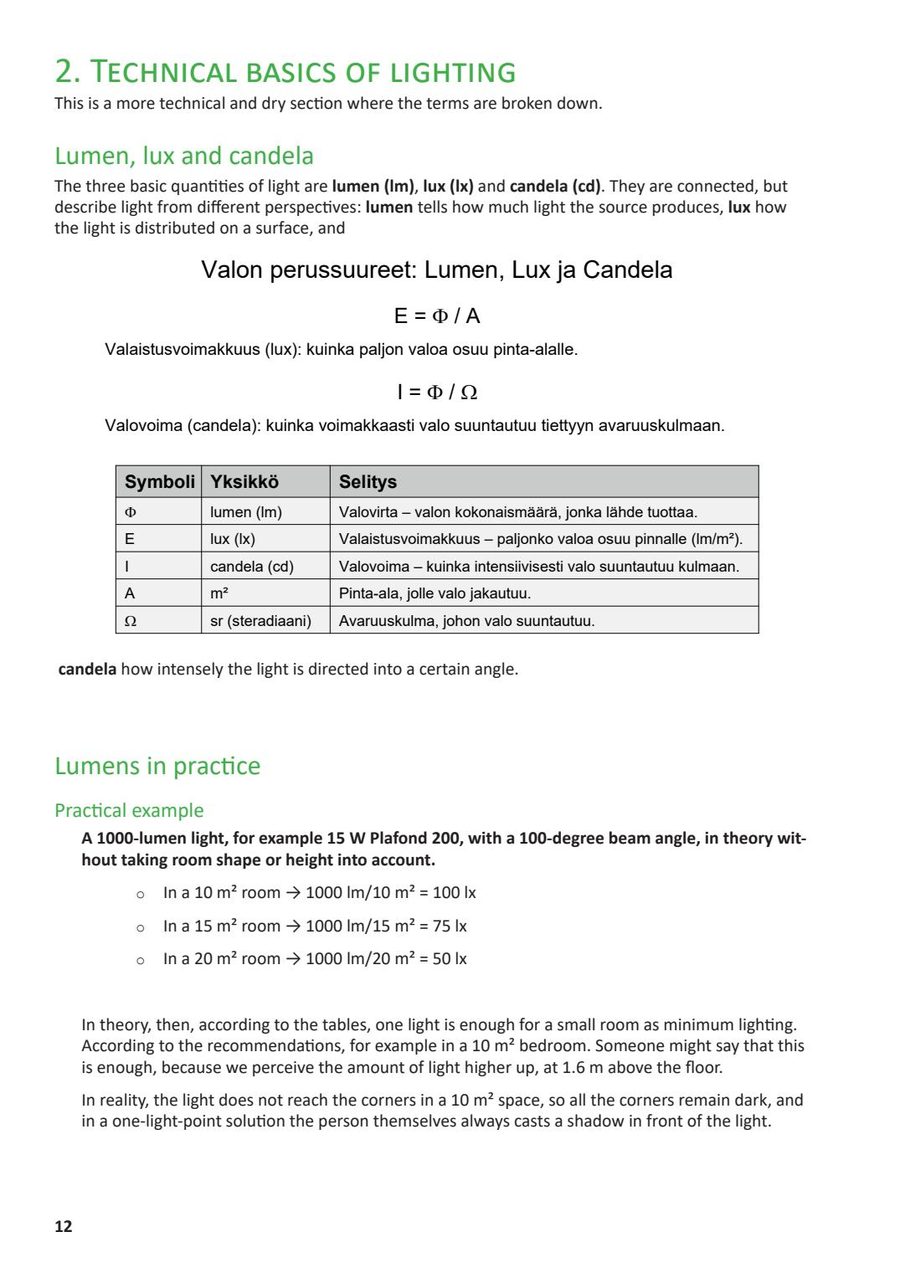
A single central ceiling light can produce a reasonable point value directly under the luminaire, but the result often drops quickly toward the corners. This is especially visible in square rooms and children's rooms where the floor is also an important working and playing surface. A person standing between the light and the task can also cast a shadow exactly where light is needed.
This is why lux planning is connected to placement. Several light points, wider spacing, task lights or indirect lighting can produce a more even and usable result. The goal is not always to make the whole room equally bright, but the important areas should receive the right amount of light.
Ceiling height changes everything
Distance reduces illuminance strongly. When the distance from light to target increases, the lux level on the target drops significantly. A luminaire that works in a normal 2.6 m room may not produce enough usable light in a two-storey living room or high stairwell. The light may look impressive in the air but not support the floor or work surface enough.
In high spaces, narrower beams, higher lumen output or layered lighting become more important. Wall lights, pendants, indirect coves and separately aimed spotlights can help bring light to the surfaces where it is needed instead of wasting it in the volume of the room.
How to use lux values in a real project
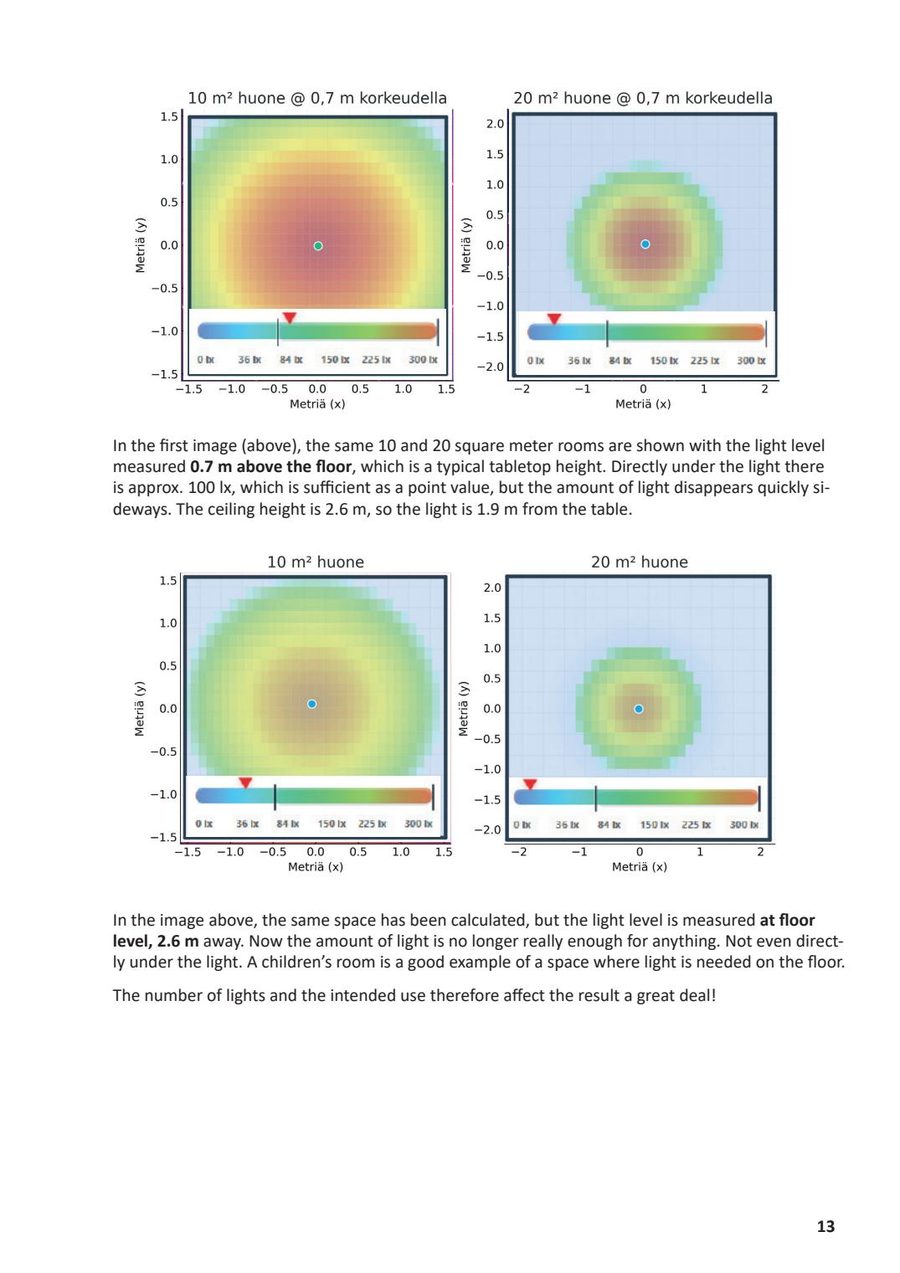
Start by marking the main task surfaces: kitchen worktop, dining table, desk, mirror, stairs, wardrobes, laundry surface and walking routes. Then decide which areas need high light levels and which only need soft orientation light. After that, choose luminaires and spacing that support those targets.
LightingDesigner.io can help visualize this by placing luminaires on a plan and comparing the result. The book gives the background logic: why certain rooms need more light, what affects the measured result and how to avoid interpreting lumen values too simply.
Practical design tip
Do not design every room for maximum brightness. Design each room for range. A living room needs bright enough light for cleaning, but also soft evening light. A bathroom needs strong mirror light, but also a calm night mode. A kitchen needs excellent task light, but not necessarily a cold work atmosphere during dinner.
Good lux planning is therefore not only about one number. It is about the right amount of light, in the right place, with the right control.