Plane Treppenlicht so, dass Sicherheit steigt, Blendung sinkt und die Architektur der Treppe betont wird.
The main purpose of stair lighting is safety
Stairs require visual clarity. The user must understand where each step starts and ends, where the landing is and how the handrail can be reached. A staircase that looks impressive but hides the step edges is not good lighting design. The first goal is always safe movement.
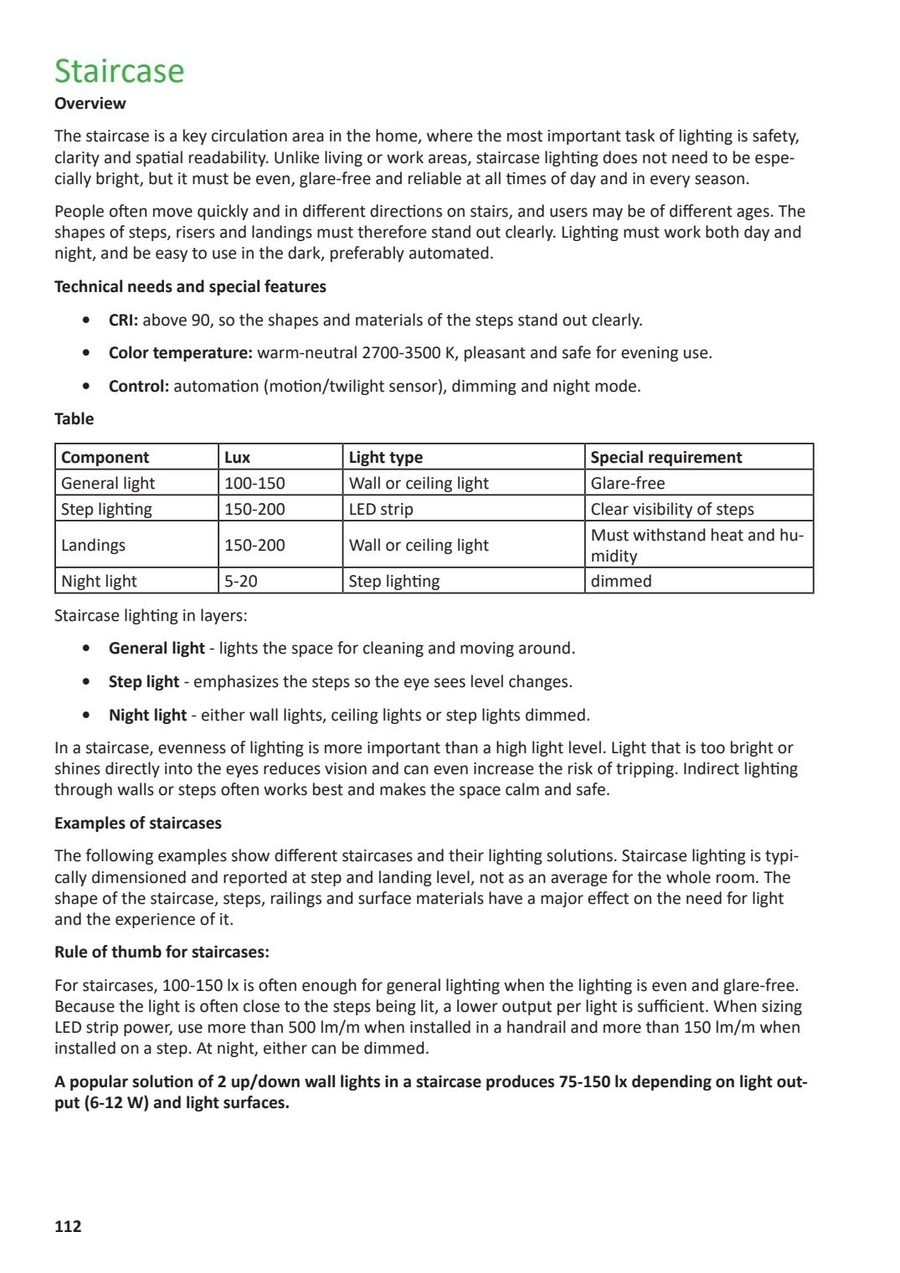
Stair lighting does not always need to be extremely bright. In many homes, 100-150 lx can be enough if the light is even and well directed. At night, much lower levels may be more comfortable. The important point is contrast: the steps must be readable and the light must not glare into the eyes when walking up or down.
Avoid glare from step level
Stair lighting is often seen from unusual angles. A luminaire that looks fine from the hallway may shine directly into the eyes when a person climbs the stairs. This is especially common with exposed LED strips, poorly shielded wall lights or step lights placed at the wrong height.
Good stair lighting hides the light source or directs it toward the step surface. Handrail LED strips, recessed wall lights, indirect under-step light and shielded profiles can all work. The light should reveal the step, not become the brightest object in the view.
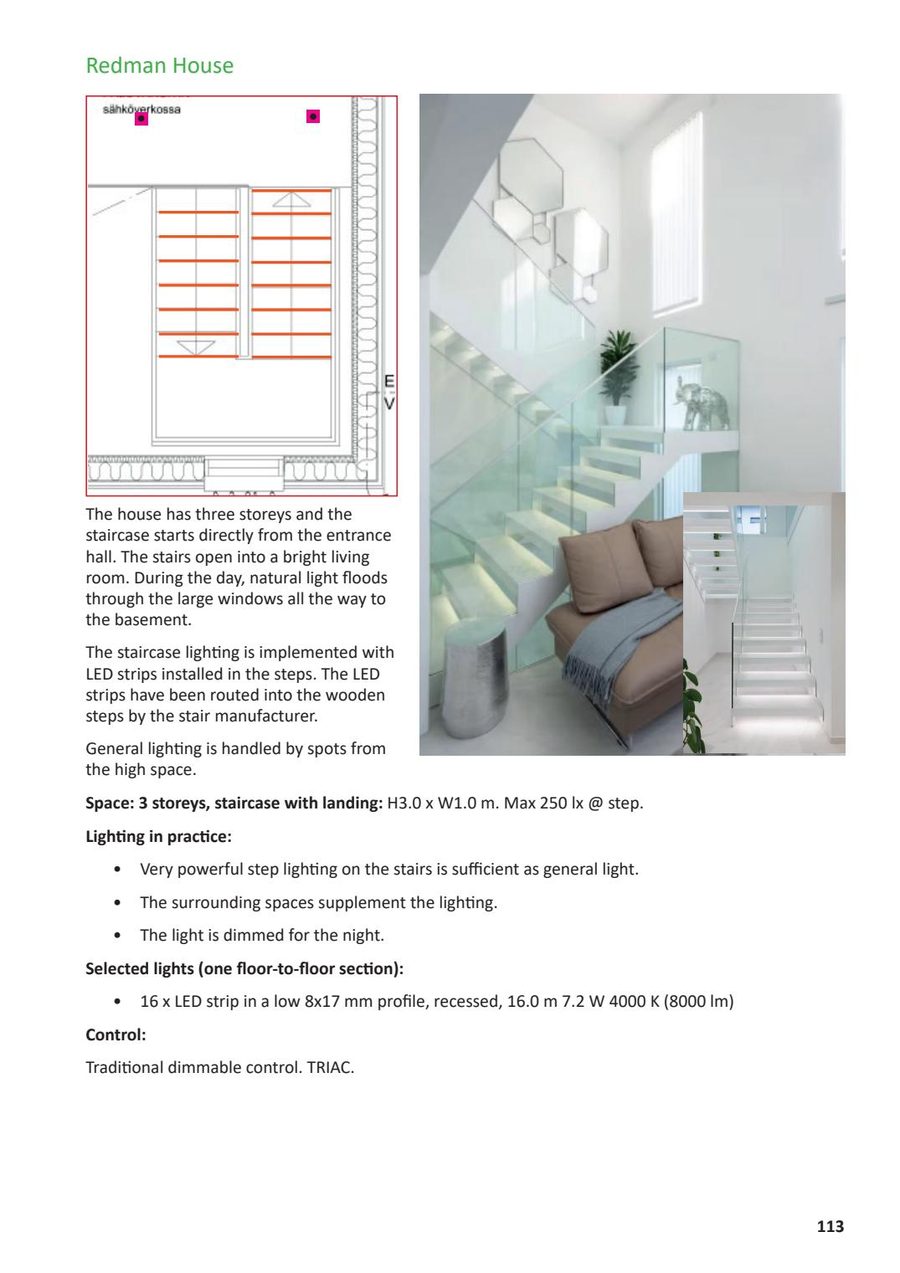
Handrail and LED strip lighting
An LED strip integrated into a handrail or under it can be an elegant solution. It guides the route and places light exactly where it is needed. The strip should be low-powered enough for comfort or dimmable so that it can also work as a night light. A profile and diffuser are important because a dotted or exposed strip can glare.
Handrail lighting also works well in renovations because it can sometimes be added without changing the whole ceiling. The driver location and cable route must still be planned carefully. The goal is a clean detail that looks intentional in daylight and works safely in darkness.
Wall lights and ceiling lights
Wall lights can create a pleasant rhythm along the stairs. They are useful when the staircase wall is visible and there is enough space for fixtures. The beam should be directed so it does not blind the user. Up/down wall lights can add atmosphere, but they should still provide enough usable light on the steps.
Ceiling lights can work in straight staircases and open stairwells, but in turning stairs they often leave shadows under landings. A single ceiling point at the top or bottom can make the stairs uneven. Combining ceiling light with step or handrail light often gives a better result.
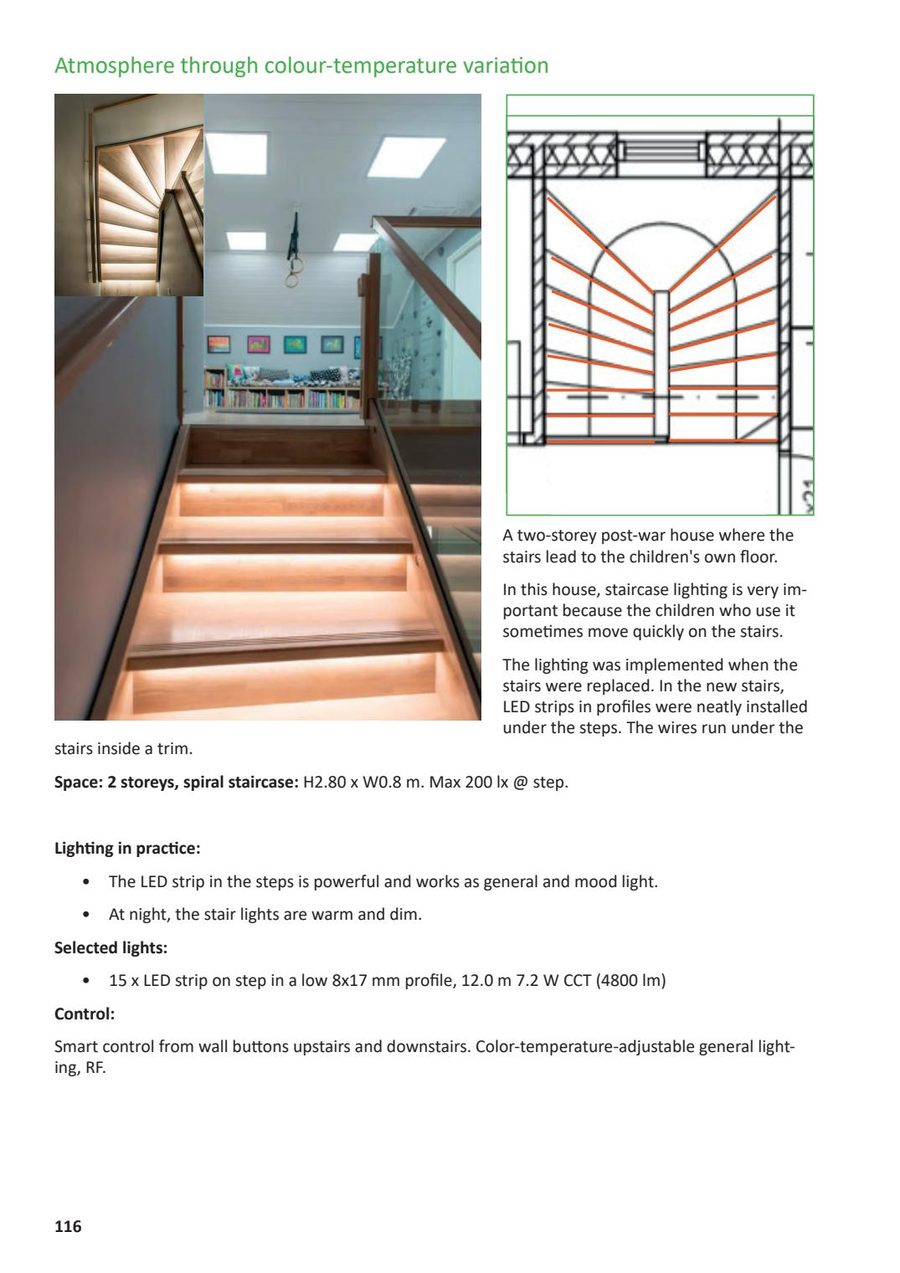
Night lighting and automation
Stairs are often used at night. Full brightness can be uncomfortable and can disturb sleep. A dimmed route light, motion sensor or smart scene can make the staircase safe without waking the whole house. The best night light is low, warm and glare-free.
Automation must be reliable. Motion sensors should detect movement before the user enters the stair run, not halfway through. Timers should keep the light on long enough. Smart control is helpful only if the basic safety function works every time.
Design checklist for stairs
Check whether the step edges are visible from both directions. Make sure there is no direct glare at eye level. Consider whether the handrail can carry light. Decide whether the stairs need both daytime brightness and night mode. Plan driver access and maintenance. Test the view from the top, bottom and landing.
When stair lighting is done well, it becomes both a safety feature and an architectural detail. It makes the home easier to use and gives the staircase a strong visual identity.