Vergleiche Zigbee, DALI, Matter, KNX, Wi-Fi und weitere Steuerungen für Häuser und Renovierungen.
Start with control needs, not technology names
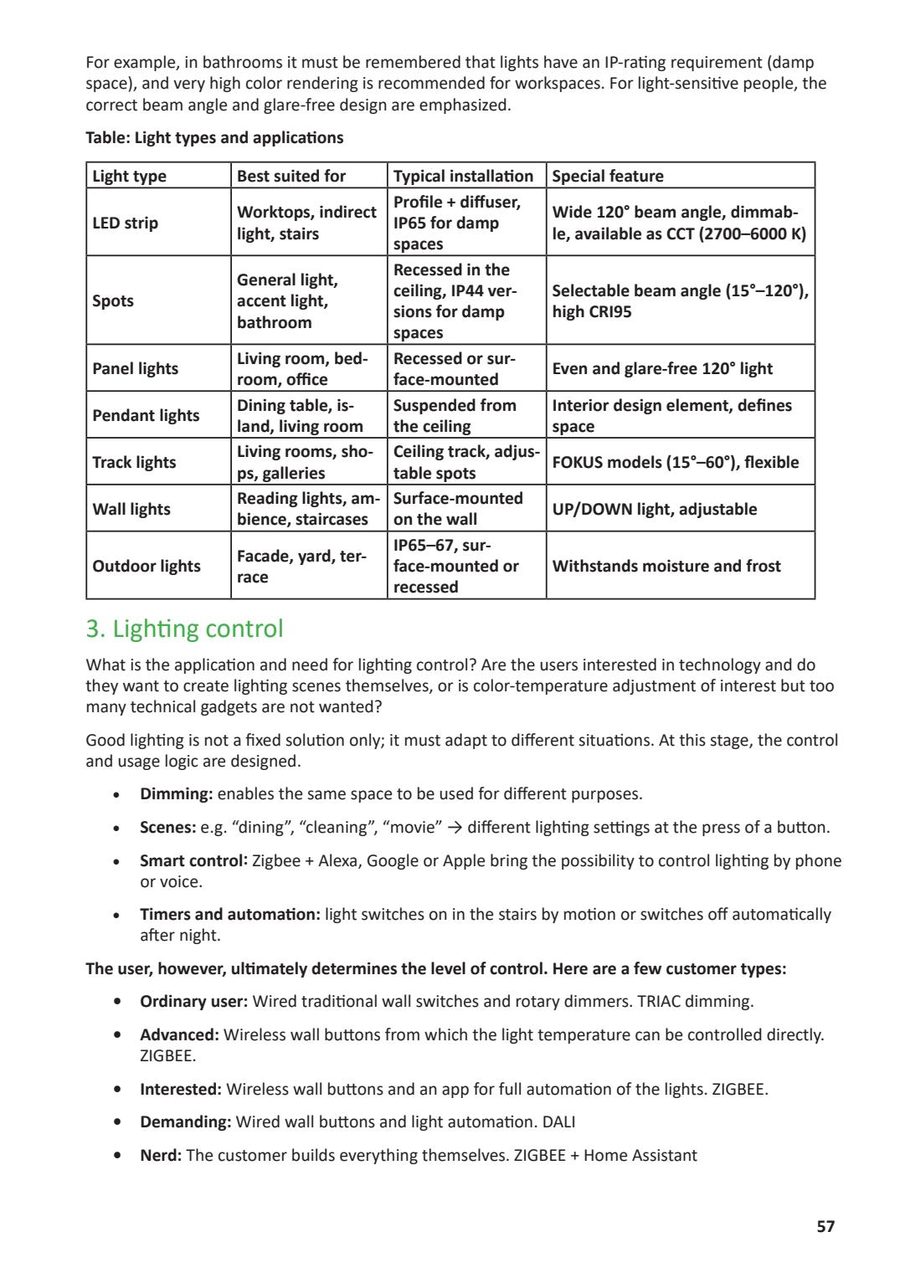
Many people start by asking whether they should use Zigbee, DALI, KNX, Wi-Fi or Matter. A better first question is what the home needs the lighting to do. Does the user want simple dimming in one room, scenes for the whole home, individual luminaire control, automation, voice control, energy monitoring or integration with heating and security?
The best system is the one that matches the project. A small renovation may benefit from wireless controls. A new high-end home may justify wired infrastructure. A single pendant may only need a compatible dimmer. The technology should serve the lighting plan, not the other way around.
TRIAC: simple traditional dimming
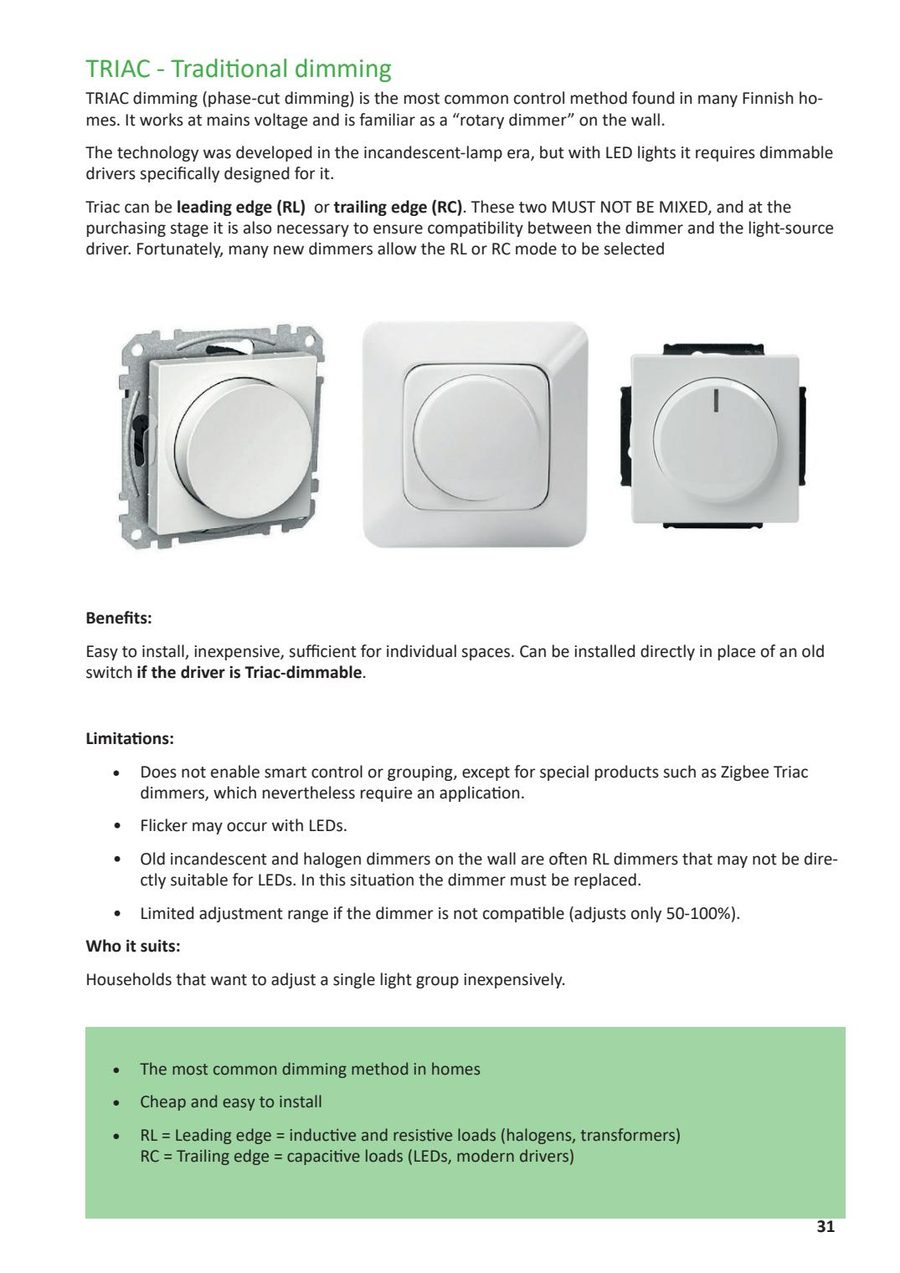
TRIAC phase-cut dimming is common in homes because it works through familiar wall dimmers and existing mains wiring. It can be inexpensive and simple for individual light groups. With LED technology, compatibility is critical: the dimmer and driver must work together, and the dimming range may vary.
TRIAC is not ideal for advanced scenes, individual luminaire control or smart grouping unless combined with special smart dimmers. It is best for simple spaces where one group needs manual dimming and the installation should remain straightforward.
DALI: professional digital lighting control
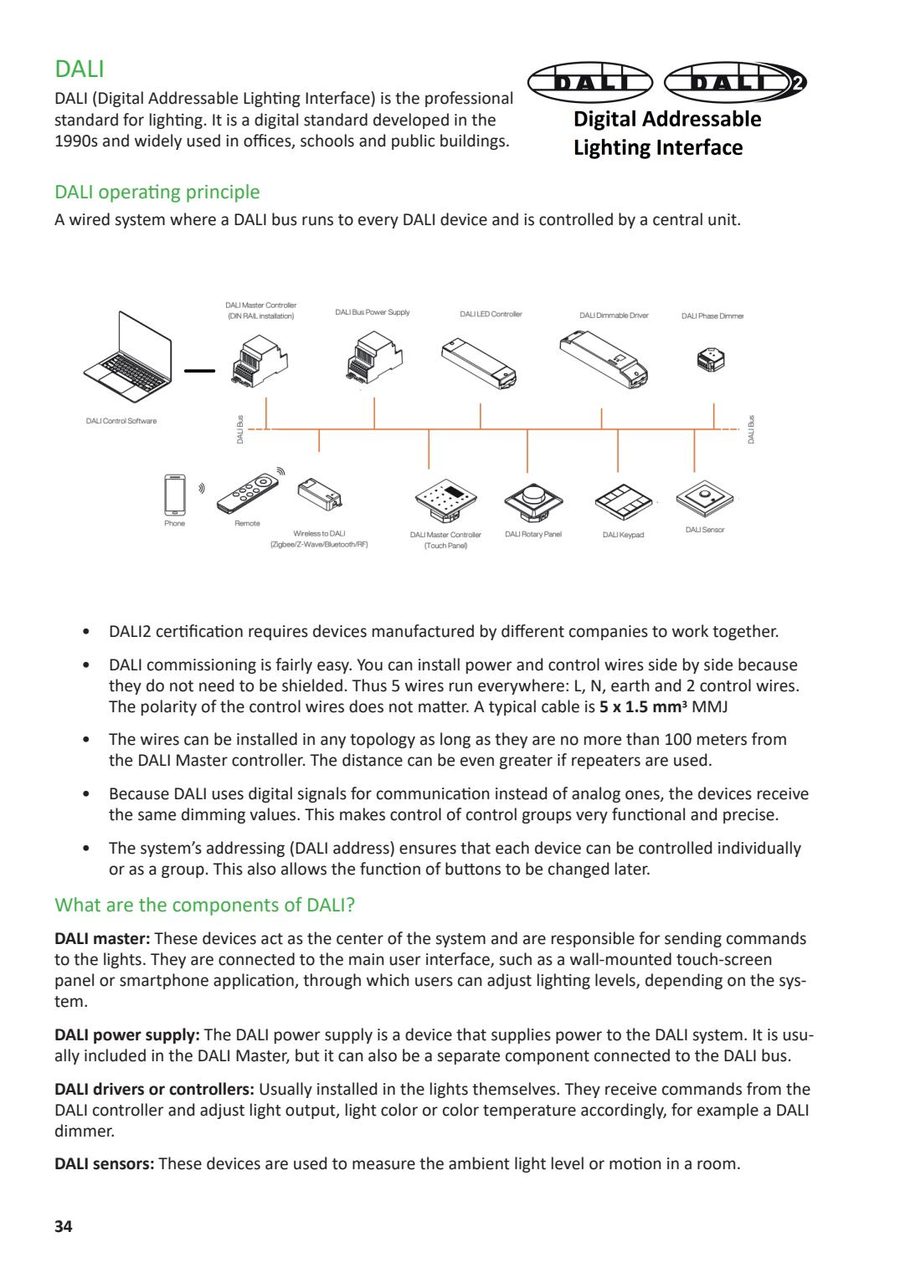
DALI is a wired digital lighting control system widely used in professional environments and increasingly relevant in quality residential projects. It allows luminaires or drivers to be addressed, grouped and controlled digitally. DALI can be very precise and reliable when the project is designed for it.
The strength of DALI is structured control. It is good for projects where multiple groups, scenes and future flexibility matter. The limitation is that it requires planning, compatible components and commissioning. It is not usually the easiest retrofit solution for a small room.
KNX: whole-home automation infrastructure
KNX is a broader building automation system that can control lighting, heating, ventilation, shading and other functions. In lighting, KNX is often used in high-end homes and larger projects where many systems should work together. It is stable and long-lasting when designed properly.
KNX is not chosen because it is the cheapest lighting control. It is chosen when the building needs a professional automation backbone. For lighting only, it may be excessive in a small home, but for a whole property it can be a strong solution.
Zigbee, Wi-Fi, Bluetooth and Matter
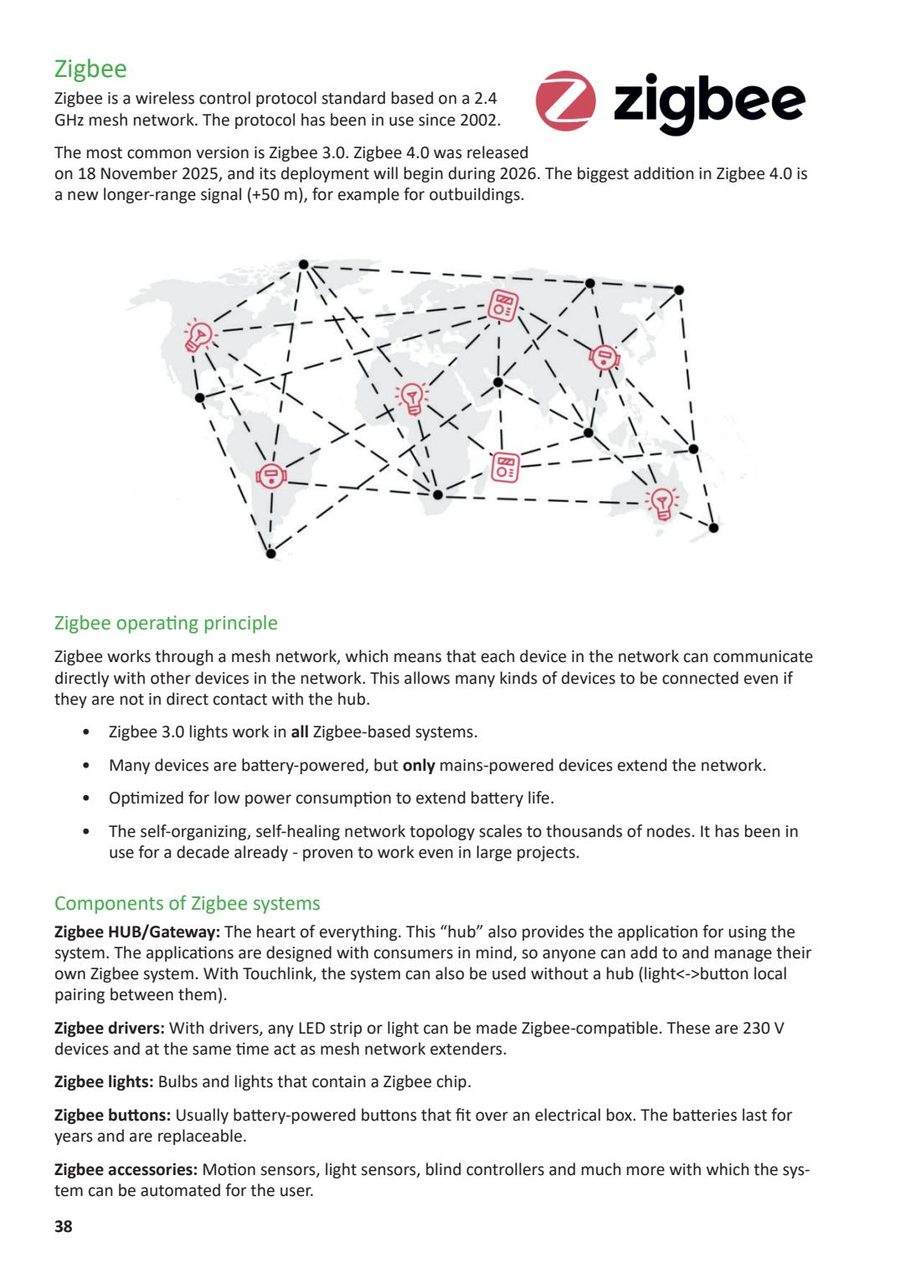
Wireless systems are popular because they make retrofitting easier. Zigbee is common in smart lighting and creates a mesh network where devices can help extend coverage. Philips Hue, Ikea, Tuya, Aqara and many other ecosystems use Zigbee in different ways. It is practical for renovations, apartments and expandable smart homes.
Wi-Fi devices connect through the home network and are easy to add, but too many devices can burden the network. Bluetooth is often used in manufacturer-specific systems and smaller setups. Matter is designed to improve interoperability between ecosystems, often using local IP or Thread. It is promising, but product support and real-world compatibility should still be checked before choosing a whole system around it.
How to choose the right control strategy
For one room, choose simple and reliable. For a renovation, wireless control can reduce cabling. For a new build, plan control groups and driver locations before wiring. For a professional project, consider DALI or KNX if flexibility and long-term serviceability matter. For a smart home enthusiast, Zigbee or Matter-compatible ecosystems may be attractive.
Most importantly, design scenes around real life: cooking, cleaning, dining, movie night, reading, night route and away mode. Good lighting control is not about having many buttons or apps. It is about making the correct lighting easy to use.