Good home lighting design is not about filling a house Wi-Fixtures and hoping the result feels pleasant. It is a structured process that connects architecture, interior materials, daily routines, technical choices and visual comfort. When lighting is designed well, a home feels intuitive: tasks are easier, circulation is safer, rooms feel more attractive, and the atmosphere can change naturally from bright daytime use to calm evening living. When lighting is designed poorly, the symptoms are obvious even if the cause is not. Worktops remain shadowy, mirrors are uncomfortable to use, stairs feel unsafe, ceilings are full of glare, and the home may look expensive on paper but disappointing in real life.
This complete guide to home lighting design is built around the same practical thinking used in real residential projects. Instead of focusing only on products, it explains how to think like a lighting designer. The goal is to help homeowners, renovators, interior designers and builders make better decisions from the beginning. Lighting should not be the final technical layer added after furniture, finishes and electrics have already been decided. It should be part of the design logic of the home from the start.
Why home lighting design matters more than most people expect
Lighting is one of the few design elements you experience constantly. It shapes how a kitchen works in the morning, how a bathroom feels late at night, how safely children or guests move on stairs, how a dining space supports togetherness, and how materials such as wood, tile, stone and textiles are perceived. Because it affects so many daily moments, even small improvements in lighting can dramatically improve the quality of life in a home.
Lighting also influences whether the architecture of a house feels flat or layered. A beautiful interior can appear dull under poor light, while a simple interior can feel refined under thoughtful light. That is why lighting design is never only about brightness. It is about function, rhythm, hierarchy, mood and control.
Begin with how the home is actually used
The most reliable way to start a lighting plan is to forget fixtures for a moment and think about activities. What happens in each room? Where do people stop, work, relax, look, wash, prepare food, put on makeup, read or move at night? A living room used for TV, reading and conversation needs a different balance of light than a bright family kitchen. A bathroom used by adults getting ready for work has different demands than a guest WC used only occasionally. A staircase that is part of the architectural experience should be lit differently from a narrow utility stair.
When you map activities first, your lighting decisions become clearer. Work surfaces need focused and usable light. Relaxation areas benefit from softer and more indirect illumination. Circulation routes need visibility and low glare. Decorative features may need accent light to create depth. This activity-based method also prevents one of the most common residential mistakes: applying the same lighting formula to every room, regardless of how it is used.
Understand the four layers of residential lighting
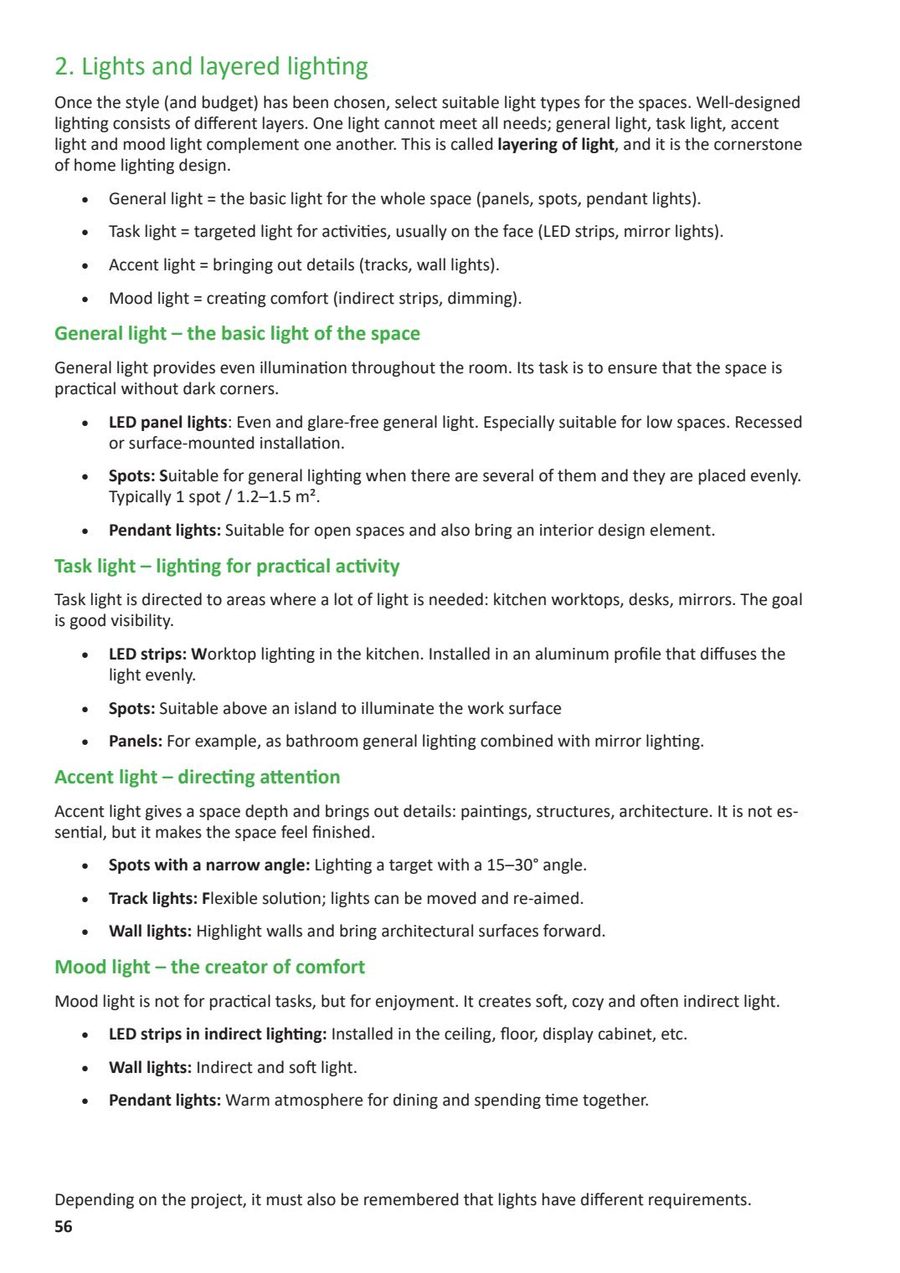
Most successful homes use layered lighting. The exact terminology may vary, but the concept is consistent. The first layer is general lighting, which gives overall visibility and spatial clarity. The second is task lighting, which supports specific visual work such as cooking, reading, shaving or desk work. The third is accent lighting, which highlights architecture, materials, objects or selected surfaces. The fourth is mood or ambient lighting, which supports a softer emotional atmosphere, especially in the evening.
Layering matters because no single luminaire can do everything well. A line of ceiling downlights may provide enough general brightness, but it may not make a dining room feel intimate or a worktop easy to use. A decorative pendant may look beautiful but fail as a practical work light. LED strips can create wonderful atmosphere, but on their own they rarely replace all other lighting needs. By combining layers, the space becomes adaptable and visually richer.
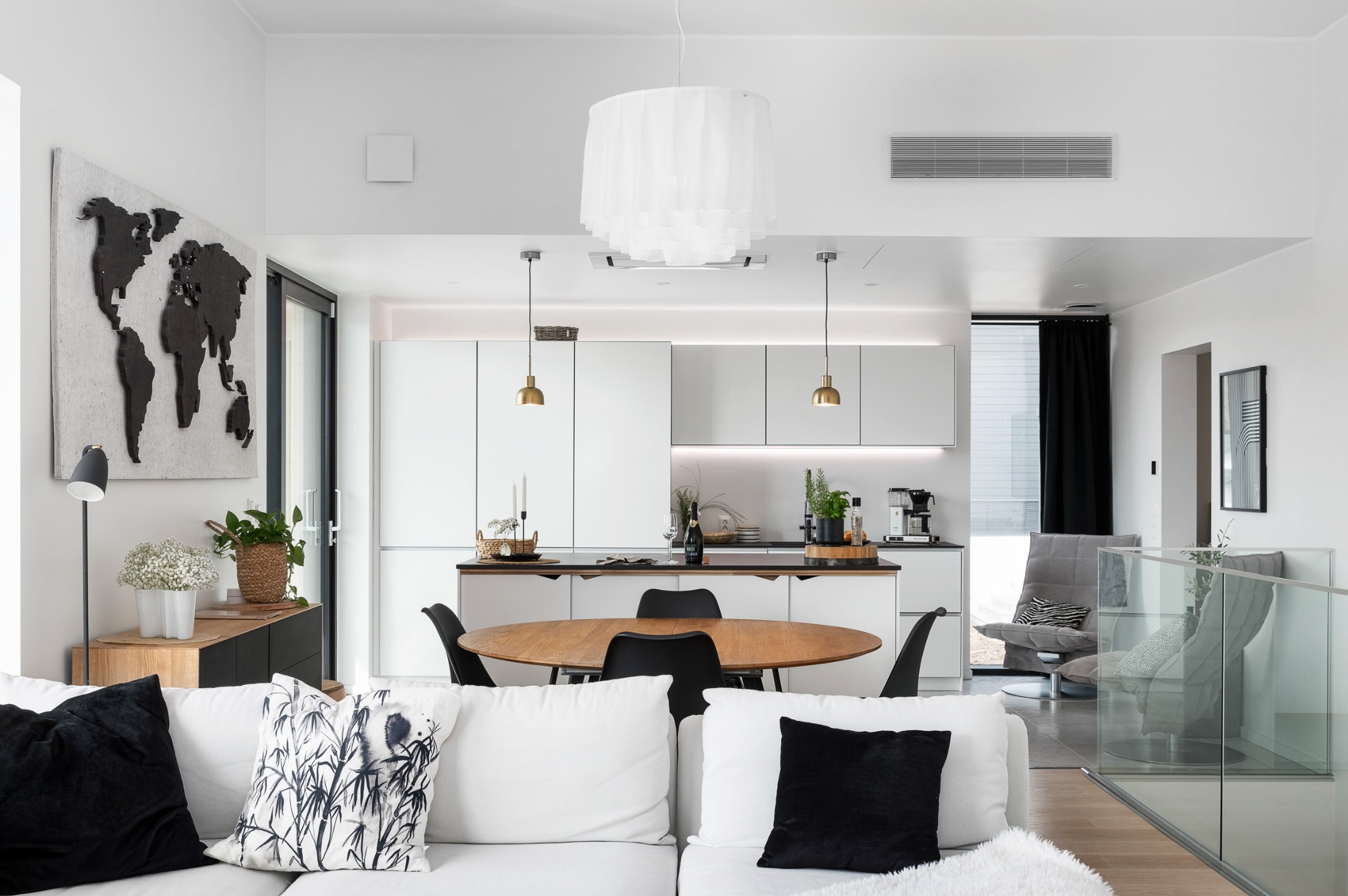
For example, an open-plan kitchen-living area may include recessed or surface-mounted general lights, under-cabinet task lighting, pendants over the dining table, indirect LED strip above cabinets, and a floor or reading lamp in the living corner. Those layers allow the same space to support breakfast, homework, cleaning, social evenings and late-night movement without feeling overlit or underlit.
Use lux levels as a design tool, not guesswork
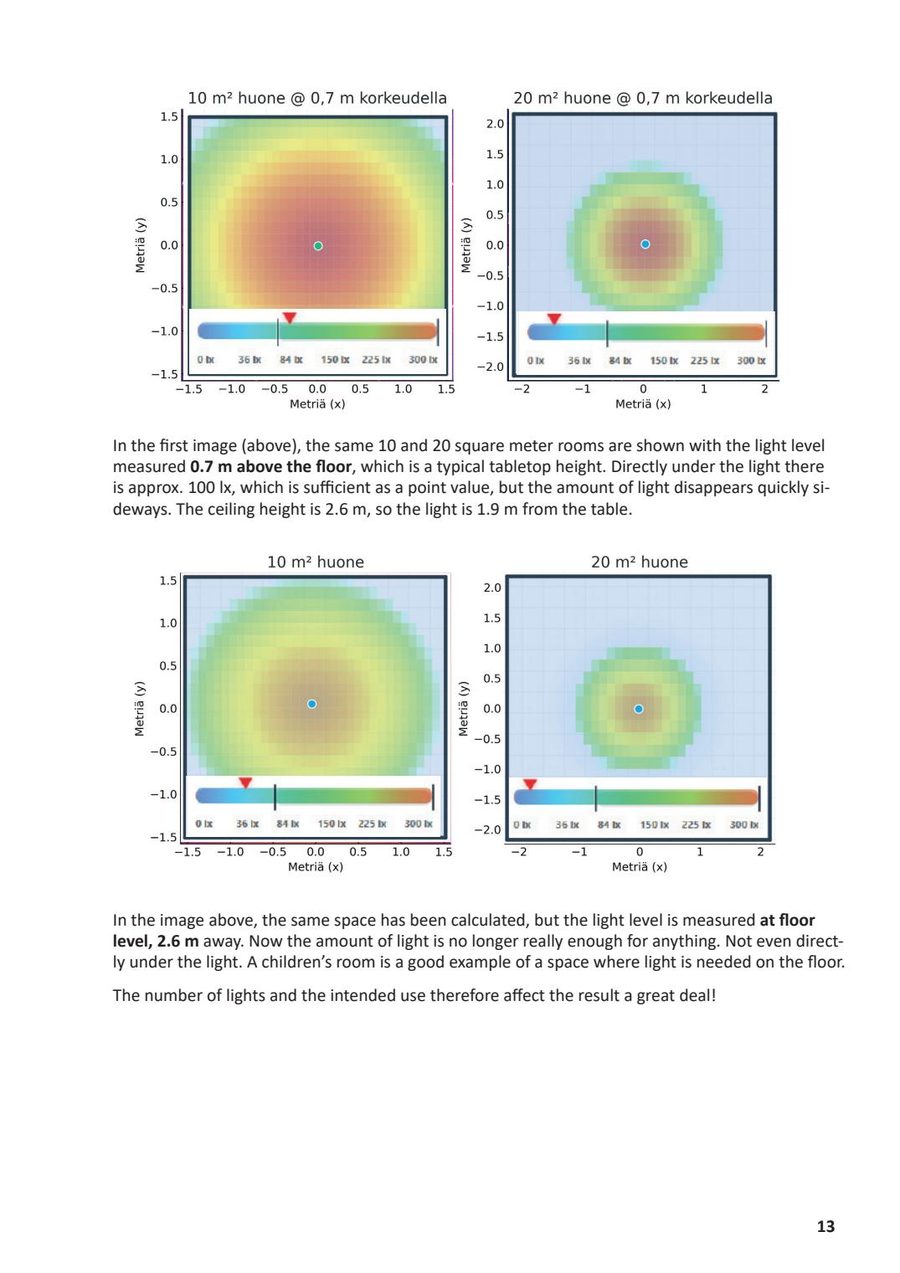
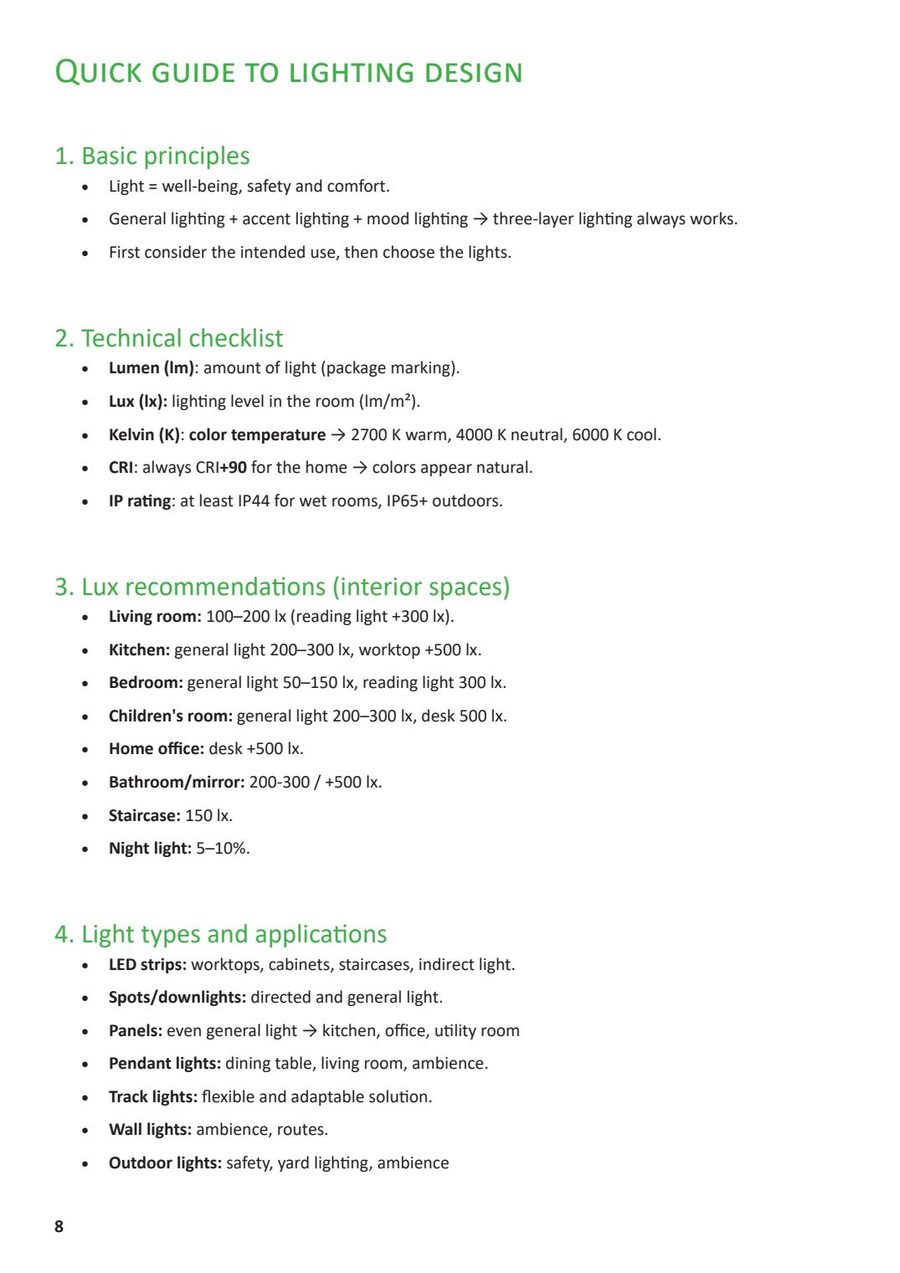
One of the most practical concepts in lighting design is lux. Lux tells you how much light reaches a surface. This matters because people do not use rooms in the abstract—they use surfaces: counters, stairs, desks, floors, shelves and mirrors. A luminaire's lumen value can be useful, but it does not tell you whether the worktop will actually be bright enough or whether the dining table will feel comfortably lit.
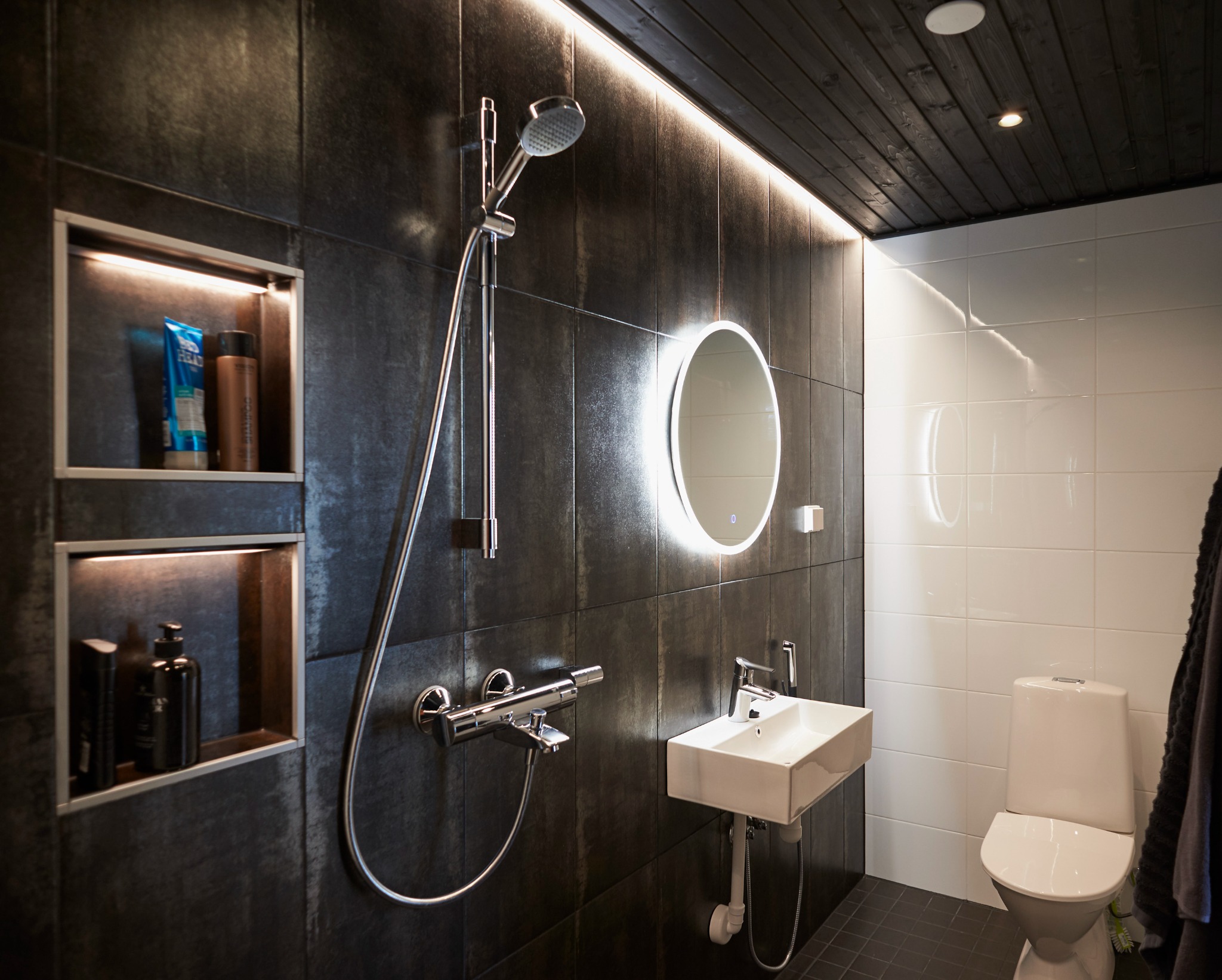
Lux targets help bring clarity to design decisions. Bedrooms and living rooms often need a lower general level than kitchens, utility rooms or home offices. A worktop, vanity area or desk needs more light than a route light at night. Bathrooms often need a combination of moderate general light and stronger mirror lighting. In practice, lux levels should be adapted to room size, ceiling height, surface reflectance and user expectations, but the principle remains simple: define the purpose of the surface, then design the lighting to match it.
This is why two rooms with similar floor areas can need very different solutions. A 10 m² bedroom and a 10 m² kitchen are not lit in the same way, because the tasks are different. Lux helps move the conversation from vague impressions toward measurable goals.
Placement is often more important than raw output
Many lighting problems are not caused by too little output, but by poor placement. Simply choosing more powerful luminaires does not automatically solve a bad design. If the light falls in the wrong place, extra lumens may only create more glare. For instance, a kitchen may appear bright from the middle of the room, yet the person standing at the counter works in shadow because the ceiling lights are behind them. A bathroom may feel bright overall, but the mirror is still uncomfortable because the light falls from above rather than onto the face.
Placement should respond to how the room is used. In kitchens, light should reach the front edge of work surfaces. In bathrooms, the face should be lit evenly. On stairs, the edge and rhythm of steps should be easy to read. In wardrobes, clothing should be visible without deep shadows. In corridors and transitions, the goal is often smooth, low-glare visibility rather than spotlight drama.
A useful design habit is to ask, "Where should the light land?" instead of only "Where should the fixture go?" This shift in thinking leads to better results very quickly.
Choose fixture types according to purpose
Residential lighting uses a wide variety of fixtures: downlights, surface luminaires, pendants, wall lights, step lights, mirror lights, table lamps, floor lamps and LED strips. None of them is universally "best." Each type has strengths and limitations. Downlights can provide clean architectural general light, but if they are overused they may create a ceiling full of bright dots and flatten the room. Pendants create focus and identity, but they must be placed carefully. Wall lights soften the room and reduce ceiling clutter. LED strips are exceptionally versatile for indirect light, worktop light, furniture details and route lighting. Table and floor lamps bring intimacy and flexibility.
The right question is therefore not "Which fixture is best?" but "Which fixture best serves this task in this position?" A decorative light is not automatically practical. A technically efficient light is not automatically comfortable. The best homes usually mix several fixture types because daily life requires several visual functions.
Color temperature affects mood, clarity and cohesion
Color temperature has a strong emotional and visual effect. Warm white light, often around 2700–3000 K, tends to feel residential, welcoming and relaxed. Neutral white, such as 3500–4000 K, can feel clearer and more task-oriented, especially in kitchens, bathrooms, laundry rooms or home work areas. Cooler tones may support alertness in some settings, but if used carelessly they can make a home feel sterile or commercial.
Good design is not only about picking one number. It is also about continuity and intent. If one room is very warm and the adjacent room is noticeably cool without a functional reason, the transition can feel accidental. On the other hand, a deliberate difference between bedroom lighting and utility-space lighting can support how the home is used. The best choice depends on architecture, material palette, glazing, personal preference and whether the lighting is fixed or tunable.
Adjustable color temperature can be useful, especially when the same space supports multiple modes of use. However, tunable lighting should solve a real need. The goal is not complexity for its own sake, but flexibility that genuinely improves the experience of the home.
CRI and light quality make the difference between ordinary and premium
People often focus on wattage or brightness and overlook light quality. Yet color rendering, often described by CRI, plays a major role in how a home looks. High-CRI light helps wood, fabrics, food, artwork and skin tones look natural. In kitchens, it makes ingredients look appetizing. In bathrooms and dressing areas, it improves grooming and appearance. In interiors built around carefully chosen materials, high-CRI light protects the design investment.
Low-quality light can make the whole home feel flatter and cheaper, even if the architecture and furniture are excellent. For that reason, light quality should be considered part of the visual design brief, not only a technical specification buried in a product sheet.
Design open-plan homes as zones, not as one uniform box
Open-plan living areas are common, but they create a challenge: multiple functions share one volume. If the whole space receives the same type and level of light, the result often feels flat, overly bright and emotionally monotonous. Good open-plan lighting works through zoning. The kitchen needs strong and practical task support, the dining zone needs focus and social warmth, and the living area usually benefits from softer, more layered light.
Zoning does not mean visual chaos. The fixture language and color temperature should still feel coordinated. The aim is a balanced composition in which each zone has a distinct role yet belongs to the same home. Pendants, track systems, LED strips, wall lights and dimmable groups all help create that structure.
Think room by room, then connect the whole house
One reason lighting design can feel overwhelming is that people try to solve the entire house in one step. A better method is to move room by room. Start with entrance and circulation, then continue to kitchen, dining, living areas, bedrooms, bathrooms, stairs and utility spaces. For each room, ask the same questions: What happens here? Which surfaces matter? Which lighting layers are needed? What is the likely color temperature? Which control groups make sense? What kind of maintenance access is required?
After each room is considered individually, look at the connections between them. How does the hallway relate to the living room? How does the staircase connect visually to the upper floor? How bright should the route to the bathroom feel at night? This second step ensures that the home works as a sequence rather than as a collection of isolated rooms.
Plan controls from the beginning, not at the end
Lighting control is one of the most overlooked parts of residential design. Many homes have acceptable luminaires but frustrating usability because everything is grouped poorly or cannot be dimmed. A practical home normally benefits from several separate lighting groups. In a kitchen, general light, worktop light, island pendants and decorative strip lighting should rarely all switch together. In a bedroom, reading light and ceiling light should be separate. In bathrooms, a bright morning scene and a soft night scene are often both useful.
The control solution can be simple or advanced. Traditional switches and dimmers are still appropriate in many projects. Wireless solutions such as Zigbee can be excellent in renovations. Wired systems such as DALI or KNX may be justified in more complex projects. Matter, Wi-Fi and ecosystem-based controls can also play a role. The correct choice depends on budget, building phase, integration goals and the user's technical confidence. What matters most is that the control strategy supports real life rather than forcing the user to adapt to the technology.
Do not ignore glare
Glare is one of the fastest ways to make a home feel uncomfortable. It can come from overly bright downlights, bare light sources in the wrong position, badly diffused LED strips, mirror reflections or luminaires placed too low in sightlines. Glare does not simply make a space look brighter; it makes it harder and less pleasant to use.
Managing glare requires attention to beam angle, diffuser quality, placement and viewing direction. Sometimes a luminaire with slightly lower output but better shielding creates a much better result than a brighter alternative. Visual comfort should always be evaluated from normal positions in the room: sitting on the sofa, walking the stairs, standing at the sink, approaching the mirror and looking across the dining table.
Renovation realities and technical buildability
Good lighting design must also survive contact with reality. Ceiling void depth, cabling paths, insulation, wet-area rules, driver access, dimmer compatibility and installation sequence all influence what can actually be built. Hidden LED strip sounds simple until there is nowhere to place the driver. A beautiful downlight layout becomes problematic if the ceiling structure is too shallow. A smart control concept may fail if compatibility between components has not been checked.
That is why practical design always includes technical coordination. Ask where drivers go, how they will be maintained, whether luminaires need IP protection, how control groups are wired, and whether the plan still functions sensibly if one smart feature is unavailable. Buildability does not reduce design quality; it protects it.
Common mistakes in home lighting design
The same mistakes appear repeatedly in residential projects. Homes rely on one central ceiling fixture and ignore task lighting. Spots are placed in a grid without considering furniture or actual use. Under-cabinet lighting is forgotten. Mirror lighting is decorative rather than functional. Color temperatures are mixed randomly. There are too few control groups. Drivers are hidden where they cannot be accessed. Cheap LED strips are used without proper profiles or diffusion. Decorative lights are expected to solve all practical needs. These are all avoidable errors.
The cure is not expensive complexity. It is a structured approach. Start with use, define layers, choose good-quality light, place it where it needs to land, organize controls logically, and coordinate the design technically before installation begins.
A practical home lighting design workflow
If you want a repeatable method, use this sequence. First, list the rooms and the activities in each one. Second, identify the critical surfaces and routes. Third, decide which lighting layers are needed in each space. Fourth, estimate target light levels and likely fixture types. Fifth, define color temperature and CRI goals. Sixth, organize control groups and dimming or smart-control needs. Seventh, review technical feasibility, including drivers, cabling, depth, maintenance and wet-area requirements. Finally, test the design visually—either through drawings, mock-ups or a tool such as LightingDesigner.io.
This workflow is straightforward enough for homeowners yet robust enough for professional design work. It also makes communication easier between client, designer, electrician and interior team, because decisions are based on a common logic instead of last-minute improvisation.
How the book and the app help
A web guide can explain principles, but practical design becomes much easier when you can see real examples and test your own ideas. That is where Lighting Design in Practice and LightingDesigner.io complement each other. The book shows real residential project examples, practical diagrams and room-specific solutions. The app helps you sketch spaces, compare approaches and begin building your own lighting plan. Together, they form a useful bridge between theory and implementation.
If your goal is to design a whole house, improve a renovation plan or simply understand what makes lighting feel professional, the next step is to keep the process practical. Learn the principles, examine real examples, and apply them room by room.
Final takeaway
The best home lighting is rarely accidental. It comes from thinking clearly about use, visual comfort, layering, quality, control and technical feasibility. When these pieces come together, the home feels better every day—not only brighter, but more functional, more welcoming and more complete. That is the real purpose of home lighting design: to make the home work beautifully in everyday life.