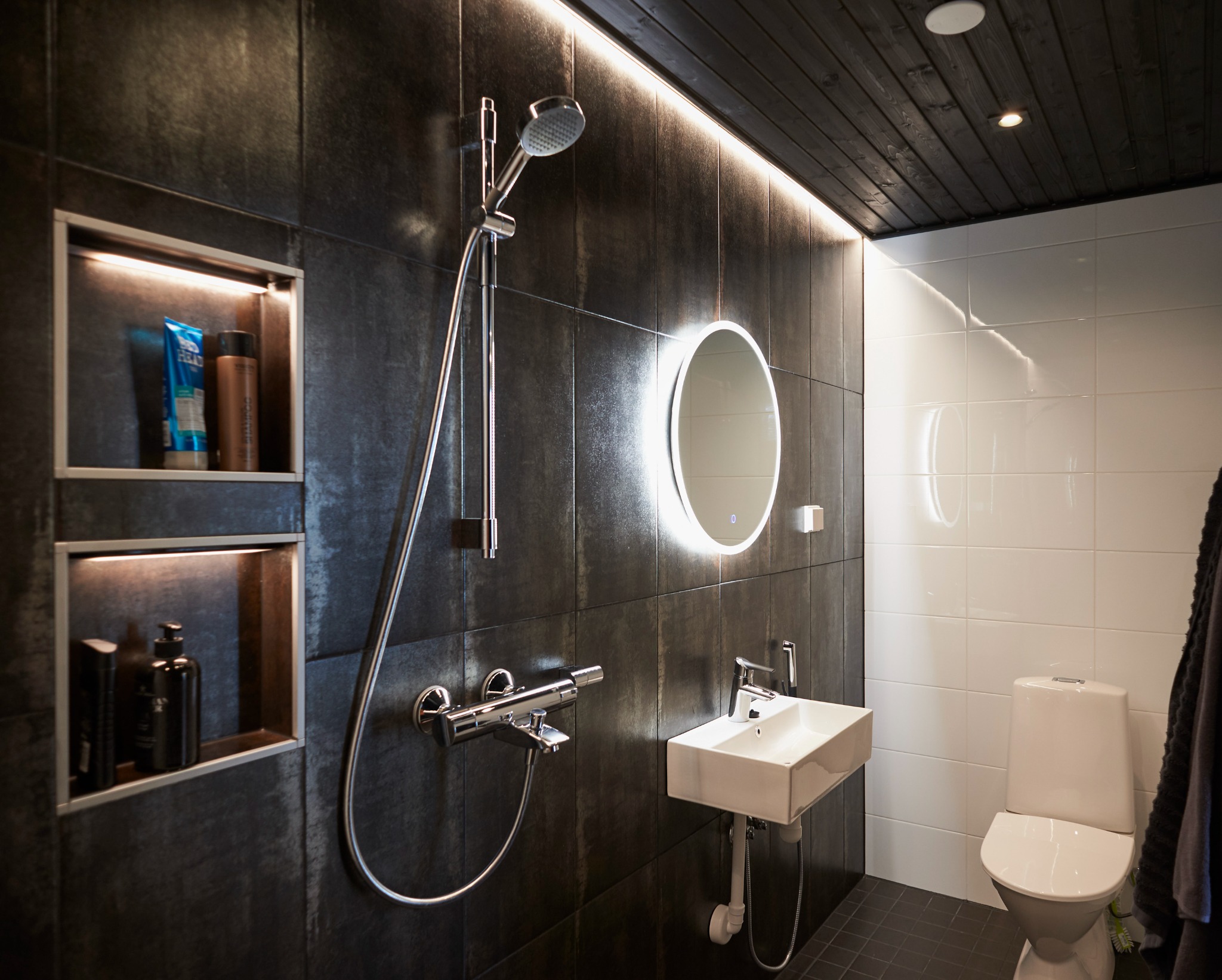
Bathroom lighting is a combination of safety, visibility and atmosphere. It must handle moisture and still make people look and feel good.
Start with safety and IP ratings
Bathroom luminaires must be chosen according to the installation location and local electrical regulations. IP rating describes protection against dust and moisture. In wet rooms, splash protection and correct installation zones matter. A luminaire that is suitable for a living room may not be suitable near a shower, bathtub or wash area.
IP44 is common in many damp-space applications, while more exposed areas may require higher protection. Drivers and connections also need suitable placement and protection. The visual design should never override electrical safety. Always follow local standards and use qualified professionals where required.
Mirror lighting is more important than people think
A bathroom can have plenty of ceiling light and still be poor for shaving, make-up or face care. The reason is shadow direction. A ceiling light above the head can create shadows under the eyes, nose and chin. Good mirror lighting should illuminate the face evenly, preferably from the sides or with a broad frontal light.
Make-up light needs especially good color rendering. High CRI helps skin tones and cosmetic colors look natural. The light should not be too warm and yellow, but also not harshly cold. A neutral or adjustable color temperature often works well. The goal is to see clearly without feeling exposed or uncomfortable.

General bathroom lighting
General lighting should make the room safe and easy to clean. Downlights, panels or moisture-rated ceiling luminaires can all work if the placement is even and glare is controlled. In small bathrooms, one central light may technically be enough, but the result is often better with several softer sources.
Light wall and ceiling surfaces help distribute light. Dark tiles require more output or more careful placement because they absorb light. A glossy surface can reflect glare, while a matte surface can soften the result. Bathroom lighting should therefore be planned together with material choices.
LED strips in bathrooms
LED strips can work well behind mirrors, under vanities, in niches or as indirect ceiling light. Behind a mirror, an LED strip creates a floating effect and soft ambience, but it is not always enough as make-up light unless the design provides useful frontal illumination. Under-vanity lighting can work as night guidance.
Profiles, sealing, IP rating and driver placement are essential. A strip should not be installed where water can reach it unless the product and installation are designed for that use. Diffusion is also important: visible LED dots can make an otherwise premium bathroom feel unfinished.

Color temperature and night use
Bathrooms need bright light for cleaning and grooming, but not every visit requires full output. A night-time bathroom route should be gentle and low-level. Warm dimmed light or a low LED strip can prevent glare and help the user return to sleep more easily.
In the morning, brighter neutral light can support alertness. In the evening, warmer and dimmer light feels calmer. This is a strong argument for separate control groups or dimmable/CCT-adjustable solutions.
Common bathroom lighting mistakes
The most common mistakes are poor mirror lighting, wrong IP rating, glare from glossy surfaces, no night mode and drivers hidden in inaccessible locations. Another mistake is choosing a beautiful luminaire without checking whether it is suitable for the moisture zone or whether replacement and maintenance are possible.
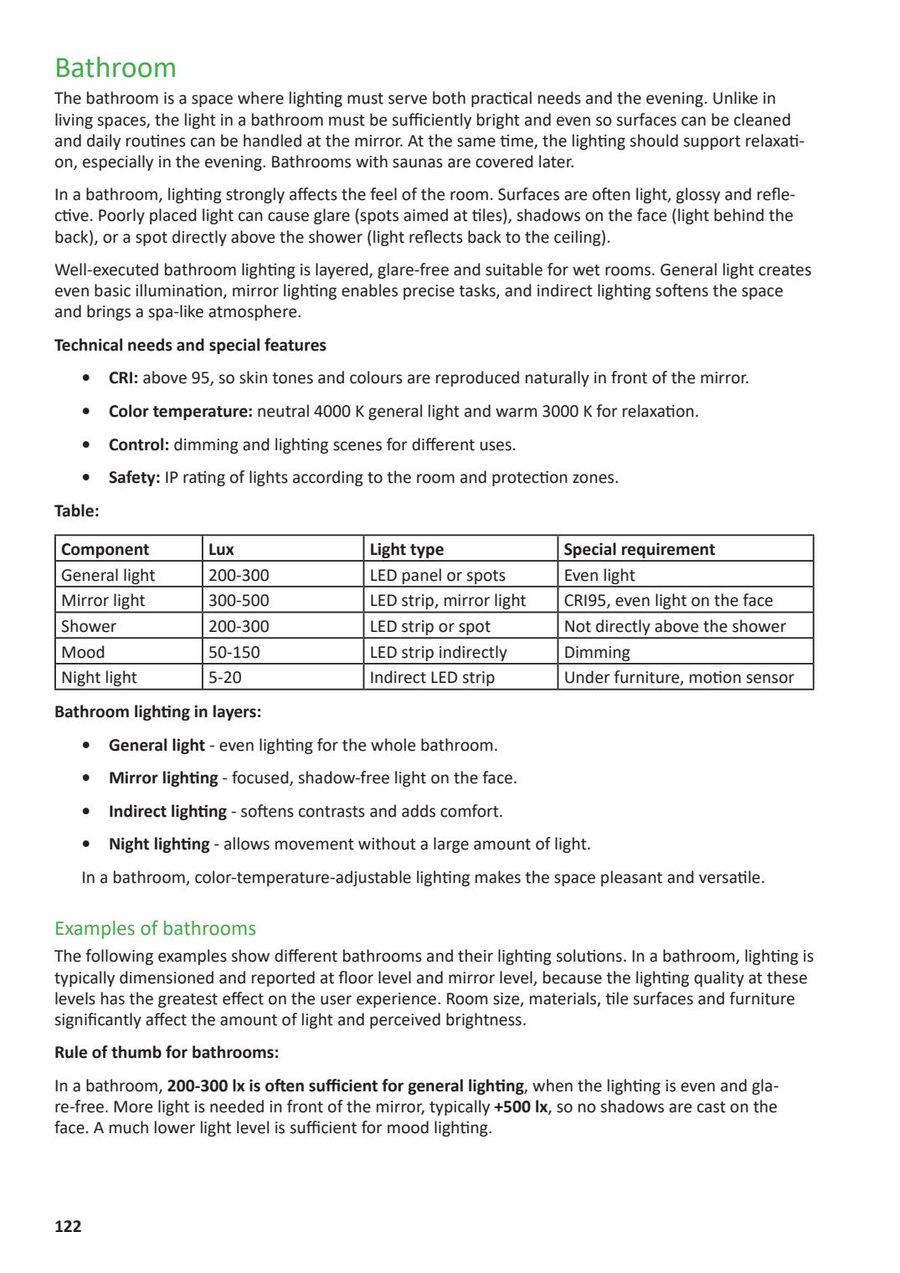
Plan the bathroom in layers: safe general lighting, proper mirror lighting, optional indirect or night light and practical controls. This produces a space that works for real daily routines and still feels comfortable.